ServicesCeramic Window Film
Ceramic Window Film in Alvin
We install ceramic window film that rejects infrared heat and nearly all UV while your windows stay clear and natural looking. It costs more than dyed film at the start, but it does not fade, corrode or interfere with signals, so it keeps working for years.
How ceramic film works and why it holds up
Ceramic window film is a polyester sheet with a coating that carries nonmetallic nano-ceramic particles. The particles absorb and turn back infrared light, the portion of sunlight that reaches you as heat, while most visible light gets through. That explains why a light ceramic film can reject more heat than a far darker dyed one.
Time is where the gap opens up. Dyed film absorbs heat with color, and sun breaks that dye down until the glass looks purple and the film bubbles. Metalized film keeps working longer, but its edges can corrode in damp air and it can weaken cell and Wi-Fi reception. Ceramic avoids both, so its higher starting price is spread over many more working years.
We give you an honest read on that trade. A bedroom facing north may do fine with a cheaper film. West windows that cook every afternoon are where ceramic usually pays for itself in comfort and a lighter cooling load.
What comes with a ceramic film install
- Glass reviewed before quoting
- We sort every pane into single, dual-pane or low-E and compare it with the film maker's glass compatibility guidance. Too much absorbed heat on the wrong glass can lead to thermal stress cracks, so we do this first.
- A grade picked for each room
- Ceramic film is sold in a range of visible light levels and infrared ratings. West and south glass may get a stronger grade, and rooms where you want a bright view may get a lighter one.
- Old film taken off
- Faded or bubbling film gets steamed and scraped away, and the leftover glue is cleaned off so the new film sticks to bare glass.
- Tidy work on the inside
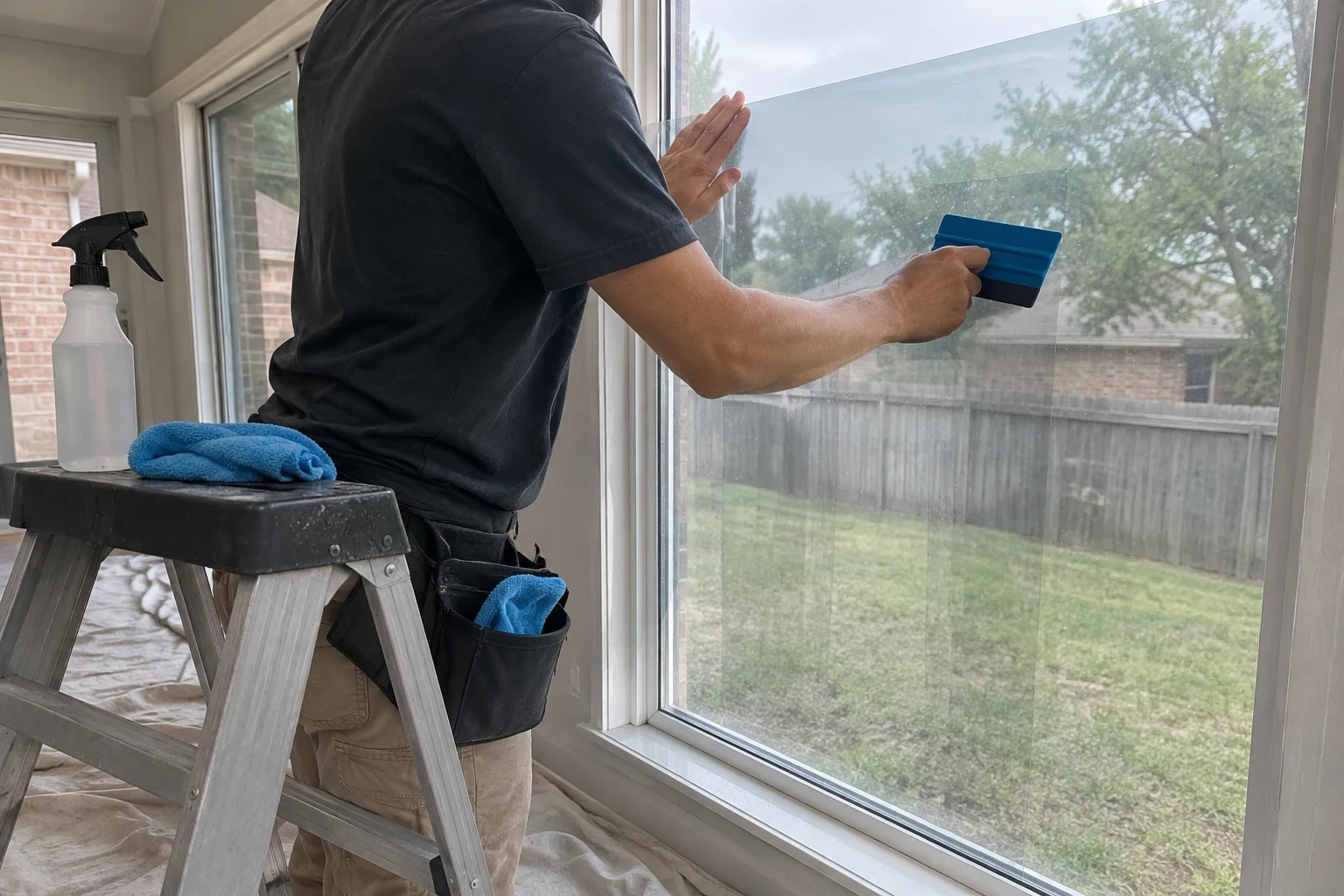
- Drop cloths cover sills and floors, every pane is cleaned and scraped, the film is trimmed with a slight gap at the edge, and the slip solution is squeegeed out.
- Wipe-down and care notes
- Before leaving we clean the glass, frames and sills and go over how to clean the film while it cures and once it has.
Signs ceramic film is the right choice
Rooms that overheat in the afternoon
A bedroom or living room facing west can run several degrees warmer than the rest of the house while the AC struggles. Infrared rejection targets exactly that heat.
Fading floors and furniture
Hardwood, rugs and upholstery near the glass lose color from UV and heat together. Ceramic film blocks nearly all UV and cuts the heat that speeds fading.
You want clear glass, not a mirror
If you dislike the shiny outside look of reflective film, or your HOA restricts it, ceramic gives strong performance with a neutral appearance.
Old tint has turned purple or bubbled
That is dye breaking down. Replacing it with ceramic means you are not doing the same job again in a few years.
Weak phone signal near windows matters to you
Metal-based films can block cellular and Wi-Fi signals. Ceramic film contains no metal, so it leaves reception alone.
What sets the cost of ceramic film
The particle technology makes ceramic film pricier per square foot than dyed or basic film. The money goes toward heat rejection that does not fade and a film you will not be replacing early. Your home's total comes down to these factors.
How much glass, and how many panes
Material cost follows square footage, and lots of small panes, such as divided French windows, mean more cutting and labor.
Grade of film
Stronger infrared rejection comes at a higher price. Using different grades depending on which way a window faces can hold the cost down and keep comfort where you need it.
Height and reach
Upstairs windows, tall glass in a foyer and panes behind built-ins call for ladders or added setup.
Stripping old film
Getting old film and baked-on glue off is slow work, more so once the dye has broken down.
Steps from call to cure
- 1
No-cost consultation
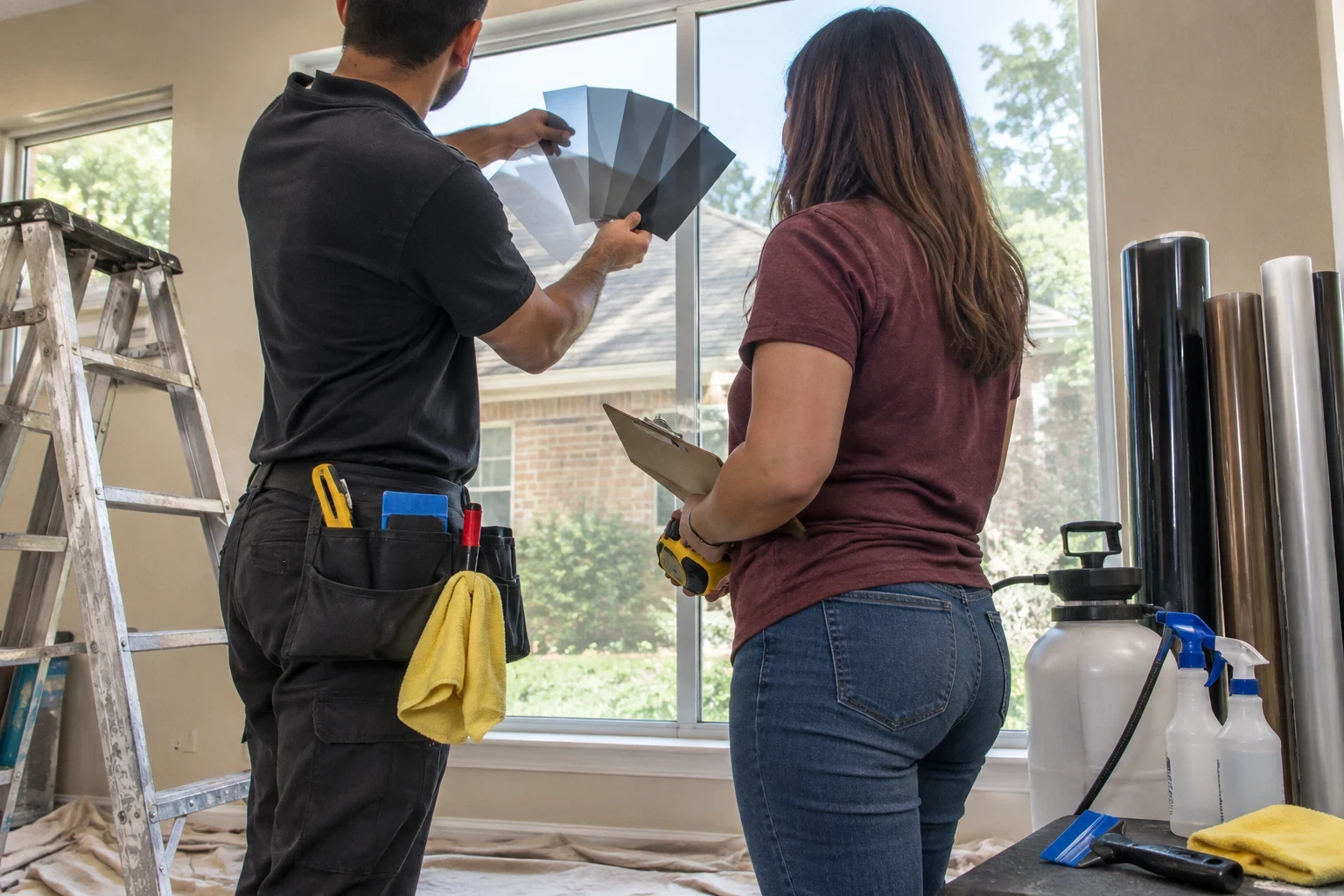
We check your windows, record the direction and sun each one gets and identify the glass. Your quote spells out the film grade for every window.
- 2
Samples on your windows
Film samples go right against your glass so you can judge shade and clarity from inside and outside before choosing.
- 3
The install
We cover the work area, clean every pane, lay the film on slip solution and squeegee it firmly to the glass. We go room by room, so most of the house stays in use.
- 4
Cure time
Over the next few weeks the moisture under the film dries out, and humid Gulf Coast weather stretches that out. Slight haze or little water pockets in the meantime are normal and go away by themselves.
Questions about ceramic window film
Does ceramic film darken a room?
Only when you pick a dark grade. The particles, not the color, do the heat rejection, so light versions still stop a good amount of infrared. Plenty of customers choose a shade they barely notice from indoors.
Can it go on dual-pane or low-E glass?
In most cases, though it depends on the glass and the exact film. We compare each window with the film maker's compatibility guidance before suggesting a product, since a poor match can put stress on the glass.
What sets ceramic apart from reflective film?
Reflective film uses a metal layer to bounce heat away and looks mirrored from outside. Ceramic uses nonmetallic particles to absorb and reflect infrared and looks much like plain glass. Our Reflective Window Film page explains when that choice fits better.
What is the right way to clean it?
Let it cure completely, then wipe with a soft microfiber cloth and mild soapy water or a cleaner without ammonia. Keep razor blades and scrub pads away, since they can scratch the protective top coat.
Does it interfere with phones or Wi-Fi?
No. There is no metal in ceramic film, so radio signals pass through it, unlike with some metalized films.
Try ceramic film on your windows
We bring samples, look over your glass and point out where ceramic is worth it and where a simpler film is enough. There is no charge for the consultation, and the quote comes by phone or in person.