ServicesSecurity Window Film
Alvin Security Window Film
Security film is a heavy, clear polyester laminate bonded to the room side of your glass with a strong adhesive. If the pane breaks, the film keeps the pieces together and holds up anyone trying to get in. We pick the film thickness and attachment for each opening so your money goes toward real protection.
What security film can and cannot do
Ordinary annealed glass shatters into long, sharp shards. Security film changes what happens when it fails. Several polyester layers, usually 7 to 14 mils thick altogether, are laminated and bonded with a strong pressure-sensitive adhesive. When the glass cracks, the adhesive holds the pieces to the film and the film keeps the sheet together.
It is not bulletproof, and we will never claim it makes glass unbreakable. Someone set on getting in with a hammer will still manage it. The difference is time and noise: a filmed pane takes blow after blow to clear, and that often makes a person quit. In a Gulf storm, the film also helps keep broken glass and blown debris out of the room.
In homes we usually film front-door sidelights, back patio sliders and ground-floor windows the street cannot see. For businesses it is storefront glass and any pane close to a lock or handle. Most security films block nearly all UV as well, so you get some protection against fading on top of the strength.
What comes with security film
Looking at the glass and frame
We note the glass type, single or dual pane, tempered or annealed, and the way the frame holds it. Some dual-pane units need a film rated for them to prevent heat stress cracks, which is why this comes first.
Thickness picked for each opening
An upstairs bathroom window and a glass door beside a deadbolt need different film. Heavier film goes where the risk is greater, and a 7-mil film goes where that is all it takes.
Frame attachment if you want it
On its own, film ends at the glass edge, so a hard blow can shove the whole filmed sheet out of the frame. A structural silicone bead or mechanical attachment strip connects film to frame and keeps the pane in place.
Thorough prep and wet install
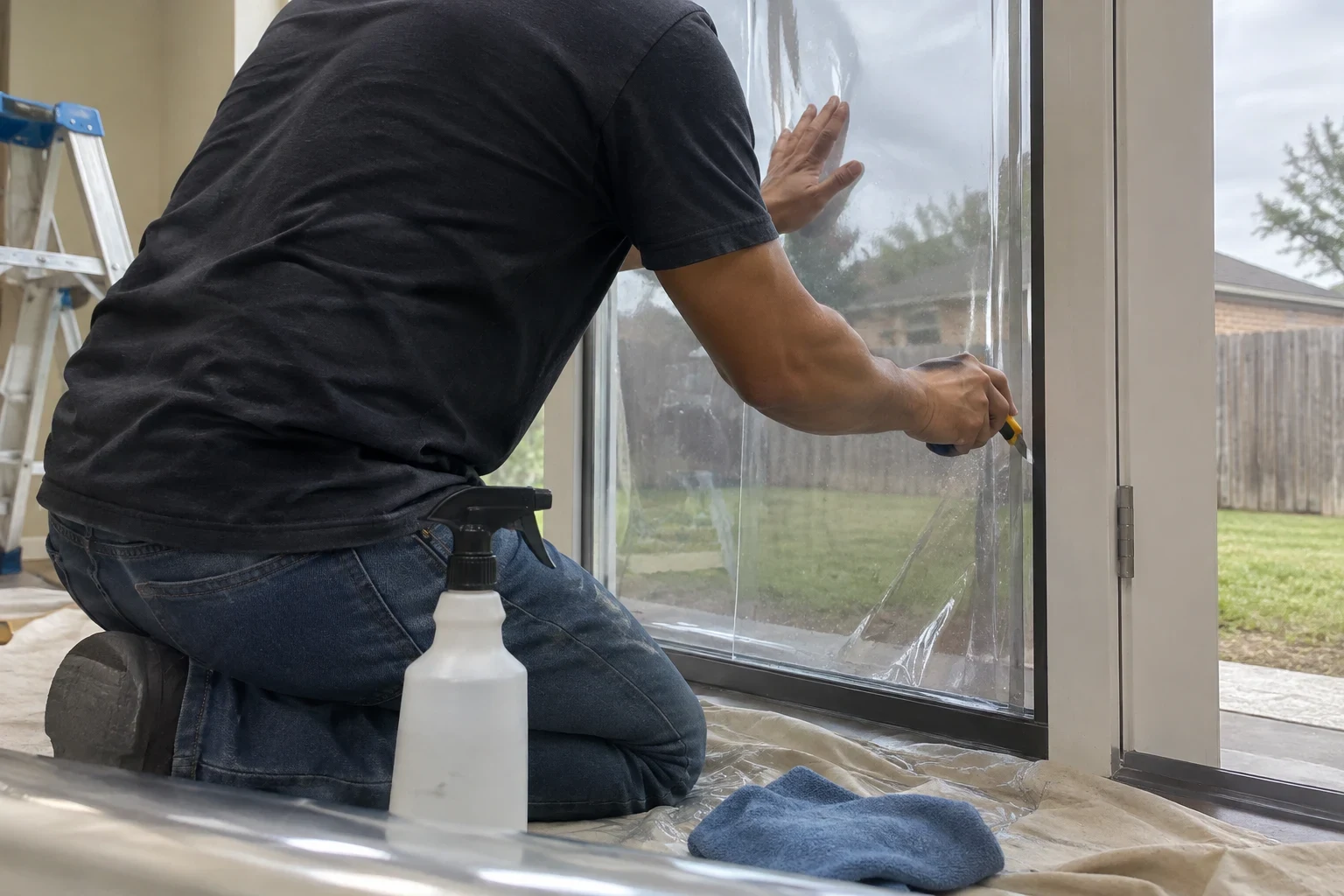
The glass is scraped clean, any old film comes off, and the new film goes on over slip solution. We squeegee out the water and trim a small, even gap at the edges so nothing lifts.
Care directions at the end
We explain how long to wait before cleaning and what to clean with. Following that keeps the scratch-resistant topcoat whole for years.
When security film makes sense
- Glass beside a lock
- With a sidelight or glass panel in or next to a door, someone can break a small opening and reach the deadbolt. Film stops that pane from clearing fast.
- Windows the street cannot see
- Side and back windows hidden by fences or bushes give a burglar cover and time. That is where slowing someone matters most.
- Concern about storm debris
- If you board up whenever a storm is coming, film gives you protection that stays on the glass all year. It is no substitute for shutters or impact glass, but it cuts down on shards flying indoors.
- A break-in or attempt before
- After a smash-and-grab or a cracked pane, many owners want the new glass protected before it happens again.
- Low glass around kids or pets
- Big panes near the floor take hits from toys, balls and dogs. Film keeps an accidental break from becoming a heap of sharp pieces.
What happens on install day
- 1
A phone consultation, then a visit
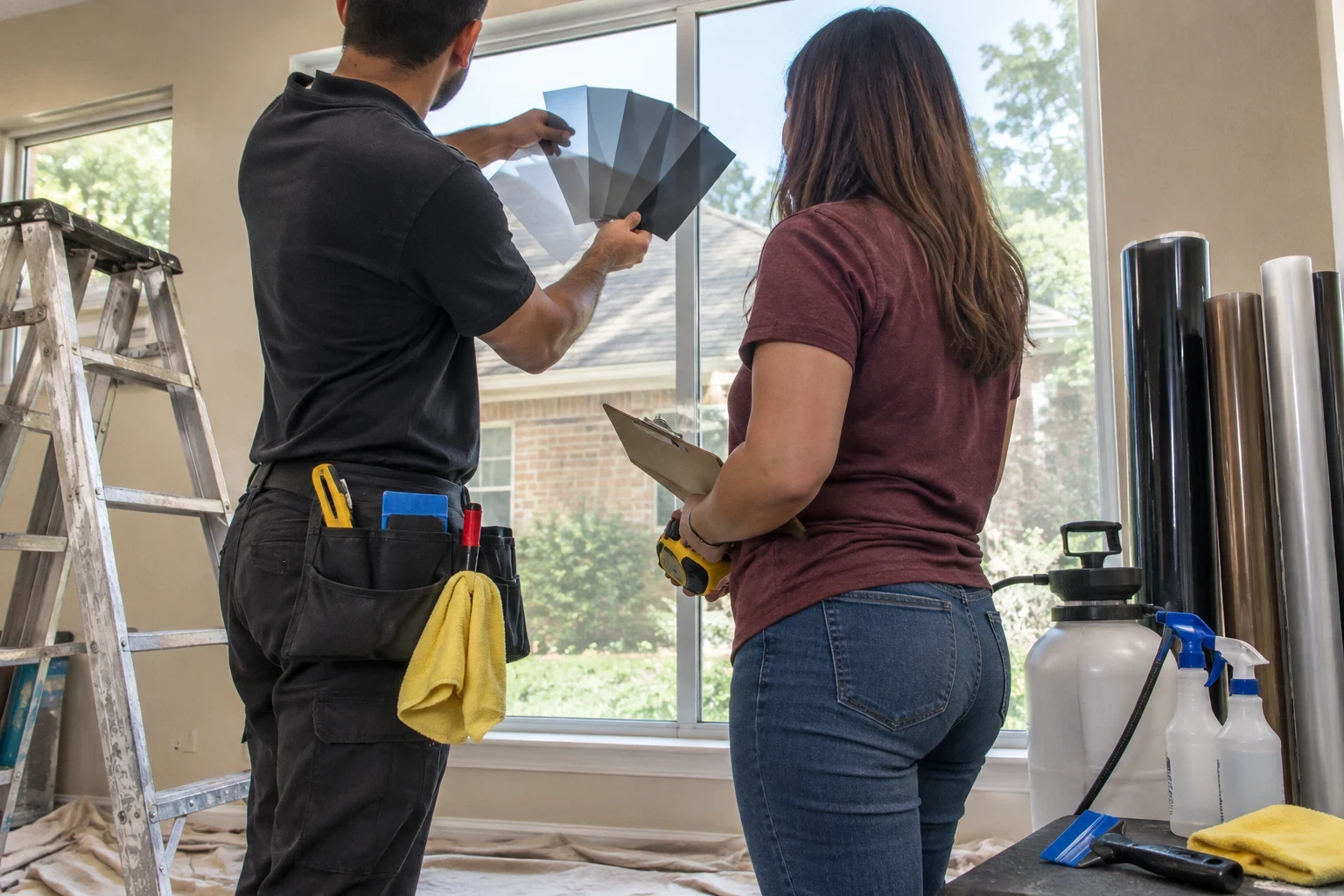
We go over which openings worry you and why. Next we see the glass and frames in person and write up a recommendation for every window.
- 2
Cover the room and clean the glass
Drop cloths go down, we move what has to move, and each pane gets cleaned with blades and pads to strip paint flecks, dust and old glue. Debris left under film turns into a bump later.
- 3
Lay and trim the film
The film is applied wet, lined up and squeegeed hard so the adhesive grips fully. We trim a small relief gap at the edges so it will not lift or buckle at the gasket.
- 4
Frame attachment, if you picked it
When attachment is part of the job, we lay a structural silicone bead or fit attachment strips along the frame. Silicone takes time to set, so we let you know which windows to leave alone and for how long.
- 5
Final look and curing
We go over each window with you before we pack up. Slight haze or small water pockets are normal while the film cures and go away by themselves as moisture escapes, sooner when it is warm.
What sets the cost of security film
Per window, security film costs more than standard solar film, since the material is heavier and the install takes longer. A fairer measure is the cost of swapping in laminated glass, or of a break-in and the glass repairs after it. Every opening is priced on its own so you can see the costs and choose window by window.
- How thick the film is
- 14-mil film is priced above 7-mil and is harder to handle and trim. We suggest the heavier film only where the risk warrants it.
- Attaching to the frame
- A silicone or mechanical attachment system adds material and labor. It is also what holds the pane in the frame under a hard blow, so it often earns its cost on doors and ground-floor glass.
- Pane count and size
- Lots of small divided panes take longer than one big sheet with the same total area, because each is cleaned, filmed and trimmed by itself.
- Reach and old film
- Tall windows that need a ladder, and glass with old sun-baked film to strip first, make the job longer.
Common questions about security film
- Can security film keep a burglar out?
- It cannot make glass impossible to get through. It makes clearing the pane much slower and louder, which puts off most quick break-ins. Along with solid locks and good lighting, it shuts the easiest way in.
- Is it see-through, and will the room get darker?
- Once cured, clear security film looks almost like plain glass. Security films with built-in tint are available if you want heat control or privacy too, and we can show samples on your glass at the consultation.
- Can it go on dual-pane windows?
- Most of the time, with the right film. A dark or very absorbent film on some dual-pane units can heat the glass and strain the seal. We look at the glass first and pick a film that suits it.
- What should I clean it with?
- After the cure time we give you, use a soft cloth or rubber squeegee with mild soap or a cleaner without ammonia. Keep razor blades and scrub pads off the film side. That habit protects the topcoat and keeps the film clear for years.
- How long is the install?
- A home with a few doors and windows is usually done in a day. Big storefronts or jobs with frame attachment can run longer, and you get a time estimate before we begin.
Find out which windows need it most
Tell us which doors and windows worry you, and we will explain the film thickness and attachment that make sense for each. You get a clear recommendation and a written price before any work is scheduled.