ServicesHome Window Tinting
Home Window Tinting in Alvin
We install window film that blocks heat, glare and UV on the inside of your existing glass. Before recommending a film, we check each pane's glass type and sun exposure, then explain what it costs now and how long it should perform.
How Window Film Works in a Home, and When It Fits
Window film is a thin polyester layer bonded to the room side of the glass with a pressure-sensitive adhesive. Based on how it is built, it turns back part of the sun's infrared heat, stops about 99 percent of UV and reduces the glare that washes out screens and makes a west-facing room hard to sit in after 3 p.m.
Film makes sense when the glass is in good shape but the room is too hot or too bright, or the floors and furniture are losing color. It does not make sense when a dual-pane unit has lost its seal and fogs between the panes. No film can repair that, and we will say so before you pay for anything.
The film you pick also decides how long the work lasts. Dyed films are the least expensive, but they fade and go purple as the dye fails. Ceramic and other spectrally selective films cost more and keep their color and heat rejection far longer. We show you both figures so you can judge cost per year of use instead of only the install-day price.
What You Get With Home Window Tinting
Every pane assessed
We record whether each window is single-pane, dual-pane, tempered or low-E, plus its size and the direction it faces. Those facts determine which films are safe on that glass.
Checking for thermal stress
Heat-absorbing film warms the glass. On big dual-pane or low-E units, that can crack a pane or strain the seal, so every film is checked against the glass type before we recommend it.
Samples held to your glass
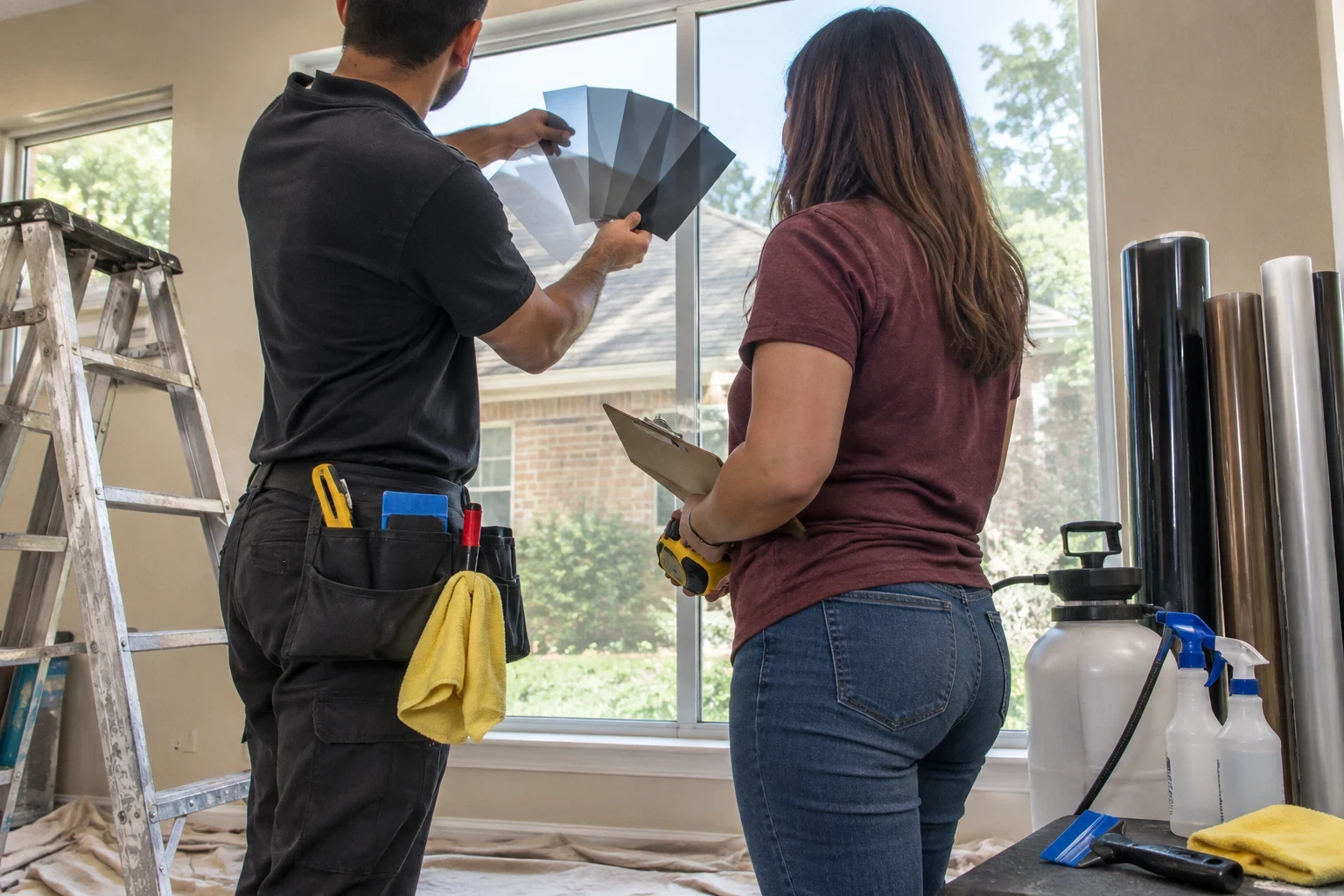
We put samples right on your windows so you see the true tint, shine and color from indoors and from the yard, in the light your home actually gets.
Neat, exact installation
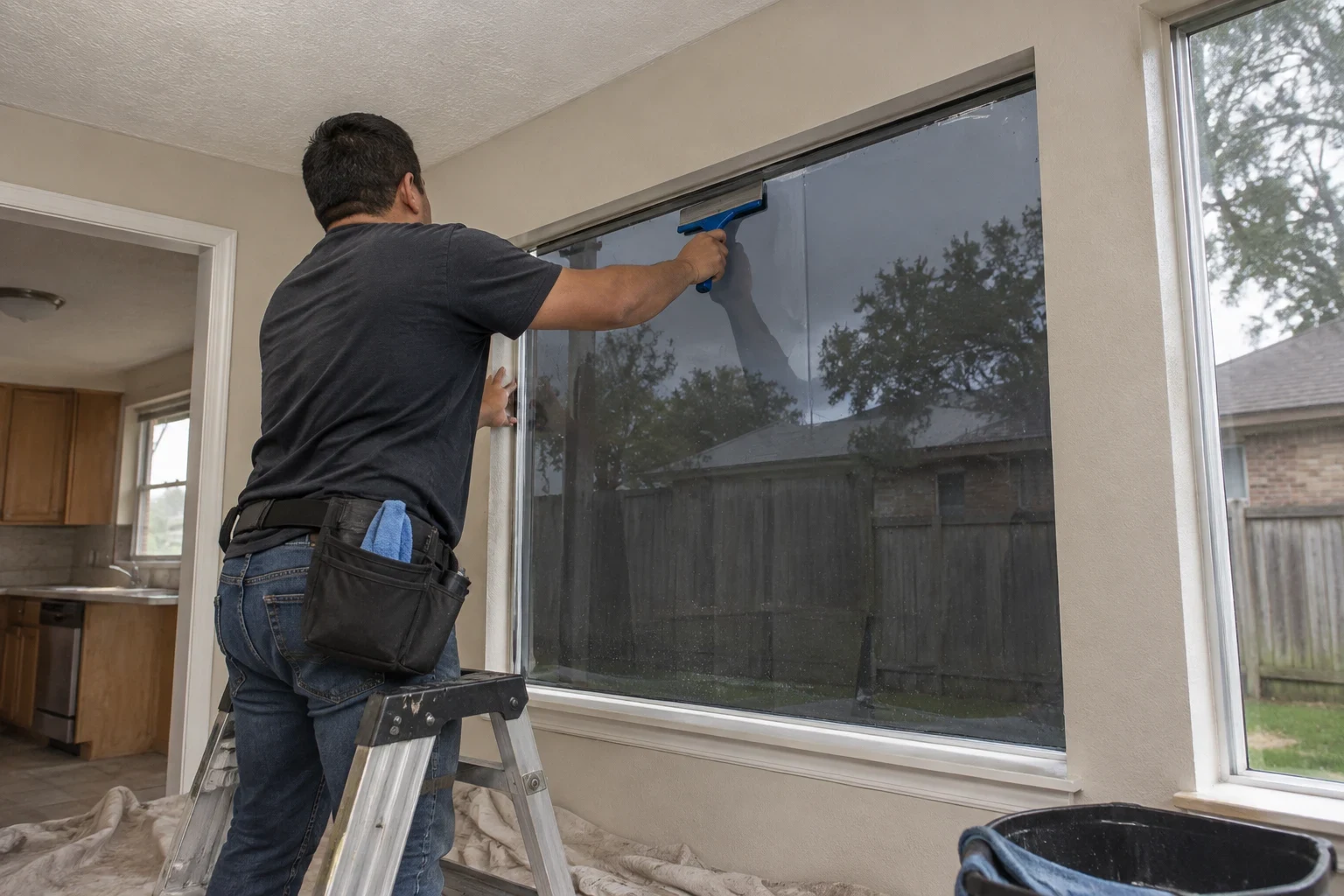
We scrape and wash the glass, float the film on slip solution, squeegee it down and trim it with a small, even gap at the frame so it stays flat.
Cleanup and care notes
We tidy the work area, wipe the sills and leave written notes on cure time and the cleaners to stay away from.
When Your Home Could Use Window Film
- A single room stays warmer
- If one room sits several degrees above the thermostat, sunlight coming through the glass is the usual reason. Here on the Gulf Coast that heat hangs on for most of the year, not only in August.
- Floors, rugs or furniture losing color
- UV and visible light wear down dyes and finishes. A pale patch where a rug once lay tells you the fading has already started.
- Screens washed out by glare
- When you have to shut the blinds each afternoon to see a TV or monitor, film can take the glare away and leave you the view.
- Blinds closed from morning to night
- Shutting out the light to keep a room cool throws away the daylight your windows are there for. With the right film, the blinds can stay open.
- Existing film is purple or blistered
- Once dyed film goes purple or starts to blister, it has failed. We take it off, clean away the glue and put on a film made to last longer.
The Steps of a Home Tinting Job
- 1
First call and consultation
Let us know which rooms give you trouble and at what time of day. Then we book a visit to see the glass, take measurements and bring samples.
- 2
Recommendation in writing
Your quote lists every window with the film named for it, plus a simple side-by-side of what each option costs now and how long it should serve.
- 3
The install
Drop cloths go down, small things come off the sills, and we go window by window. A typical house is finished in one day, and you are free to stay home throughout.
- 4
Letting it cure
Over the first few weeks a slight haze or tiny water pockets may show as moisture works out through the film. This is expected and goes away by itself, sooner when the weather is warm and sunny.
What Sets the Cost of Film for Your Home
Our quotes go window by window, so every dollar is accounted for. The larger point is value over the years: a low-cost film you have to replace halfway can end up costing more than a better film put on once.
- Which film you choose
- Dyed, metalized and ceramic films vary in price, heat rejection and service life. Ceramic is pricier at the start, but it holds its color and leaves cell and Wi-Fi signals alone.
- Glass area and number of panes
- How much glass you have drives the material cost. A window split into many small panes takes more labor than a single pane of equal size.
- Reaching the glass
- Tall stairwell glass, transoms and windows over a tub can call for ladders or staging, and that takes extra time.
- Taking off old film
- Pulling failed film and its glue off the glass is slow and careful work, so it shows up as a separate line on the quote.
Common Questions About Tinting Your Home
- Does window film leave my rooms dim?
- Only if you pick a dark shade. Ceramic and spectrally selective films turn away much of the infrared heat but pass most of the daylight, so a room can run cooler without looking tinted. We put samples on your own glass so you can see for yourself.
- Is film risky for dual-pane windows?
- It can be when the film and glass are mismatched. Films that soak up a lot of heat warm the glass and put stress on it, most of all on big or low-E units. So we confirm every film suits the glass type before we suggest it.
- What should I use to clean tinted windows?
- Let the film cure first. After that, a soft cloth or rubber squeegee and mild soapy water is all it needs. Ammonia cleaners and scrub pads can scratch or cloud the hard coat, so leave them out.
- How much heat does the film really stop?
- That varies by product. Every film comes with a published total solar energy rejected number, and we list it beside each option in your quote so you can line them up directly.
- Does ceramic film justify its higher price?
- On windows that get a lot of sun, it usually does. It keeps its color and heat rejection for many years, where dyed film can fade and have to come off. See our Ceramic Window Film page for the details.
Find Out Which Film Fits Your Glass
We will look at your windows, show you samples in your own light, and walk through what each option costs now and over the years. The consultation is free.