ServicesTurf Protection Film
Turf Protection Window Film in Alvin
Low-E glass can bow inward and act like a magnifying mirror, burning lines into artificial turf and warping vinyl siding. We find the window doing the damage and apply a film that breaks up that reflected beam, so the turf you paid for stops melting.
Why a window can melt synthetic grass
Most newer double-pane windows have a low-E coating and a sealed air or argon gap. As the day heats and cools, pressure inside the unit changes and the glass flexes slightly concave. That curved, coated surface reflects sunlight and focuses it into a narrow hot band. On polyethylene turf fibers, which soften well below the temperature that reflected beam can reach, the result is a scorched strip that moves across the yard with the sun.
Turf protection film fixes the cause, not the symptom. It lowers the exterior reflectance of the glass or diffuses the reflected light so it no longer concentrates into one spot. In Alvin the damage often shows up in fall and winter, when a lower sun angle puts the reflection right onto the yard, so a patch that looked fine in July can be ruined by November.
We look at this as a cost comparison over years. Replacing a section of turf without changing the window means it melts again. A film costs a fraction of new turf and keeps protecting it for as long as the film lasts, which is why we treat the window first.
What the work includes
Tracing the reflection
We match burn marks on the turf or siding to the sun's path and the window angles, so we film the glass actually causing the damage and not every pane on that wall.
Film selection for the glass type
Low-E units are sensitive to added heat load. We choose a film rated for that glass and explain which face of the glass it goes on and why, since that choice affects both performance and lifespan.
Glass prep
Each pane is scraped and cleaned, and the gaskets and frame edges are detailed so the adhesive bonds without trapped grit or lifted corners.
Installation and edge finishing
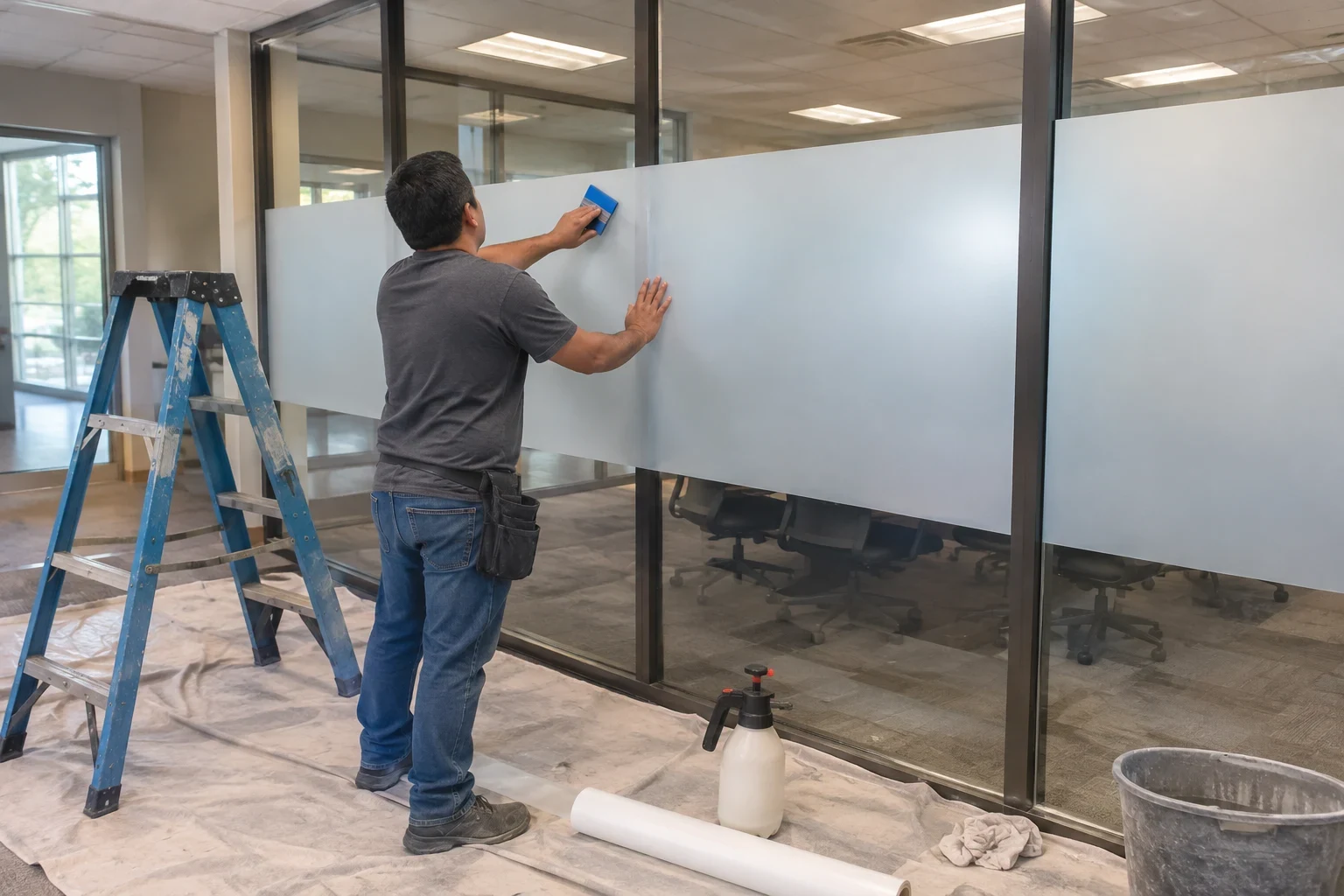
Film is cut to the visible glass with a small, even gap at the edges, squeegeed out, and checked against the light for bubbles before we move on.
Walkthrough and care notes
We show you how the film looks from inside and out, how long to wait before cleaning, and which cleaners to skip.
Signs your windows are damaging the yard
- Curved melt lines in the turf
- Shiny, matted or shrunken fibers in a crescent or stripe are the classic pattern. The shape follows the sun's track across the day.
- Warped or rippled vinyl siding
- Vinyl siding on your house or a neighbor's can distort from the same focused reflection. It usually appears on the wall facing a low-E window.
- Scorch spots on outdoor furniture
- Plastic chairs, trash bins and hose reels that soften or discolor in one spot point to a reflected hot zone.
- Damage that returns after a repair
- If a replaced turf section melted again, the window is still focusing light and new turf alone will not hold up.
How the job runs
- 1
Phone consultation
You describe what melted and where, and we talk through window orientation and glass type. This call is free and gives us enough to plan the visit.
- 2
On-site check and written quote
We confirm which panes are responsible and give you a line-item quote listing each window and the film chosen. You decide with the numbers in front of you.
- 3
Install day
Most jobs take a few hours. We lay drop cloths, prep and film each pane, and leave the work area clean.
- 4
Curing period
Some haze or small water pockets are normal for a few days to a couple of weeks while the film dries out. They clear on their own as moisture escapes.
What moves the price
Turf film is priced by the windows involved, not the size of the yard. We quote each pane separately so you can see where the money goes. The bigger comparison is film against repeated turf or siding repairs, and that math usually favors stopping the reflection.
- Number and size of panes
- Often only two or three windows cause all the damage. Filming just those keeps the job small.
- Film type
- Diffusing and low-reflectance films differ in cost and lifespan. Film facing outdoor weather wears faster than film on an interior face, and we explain that trade-off before you choose.
- Access and height
- Second-story or transom windows need ladders or staging, which adds time.
- Glass condition
- Failed seals, scratches or old film that must be removed add prep before new film goes on.
Turf protection film questions
- Will the film change how my windows look from inside?
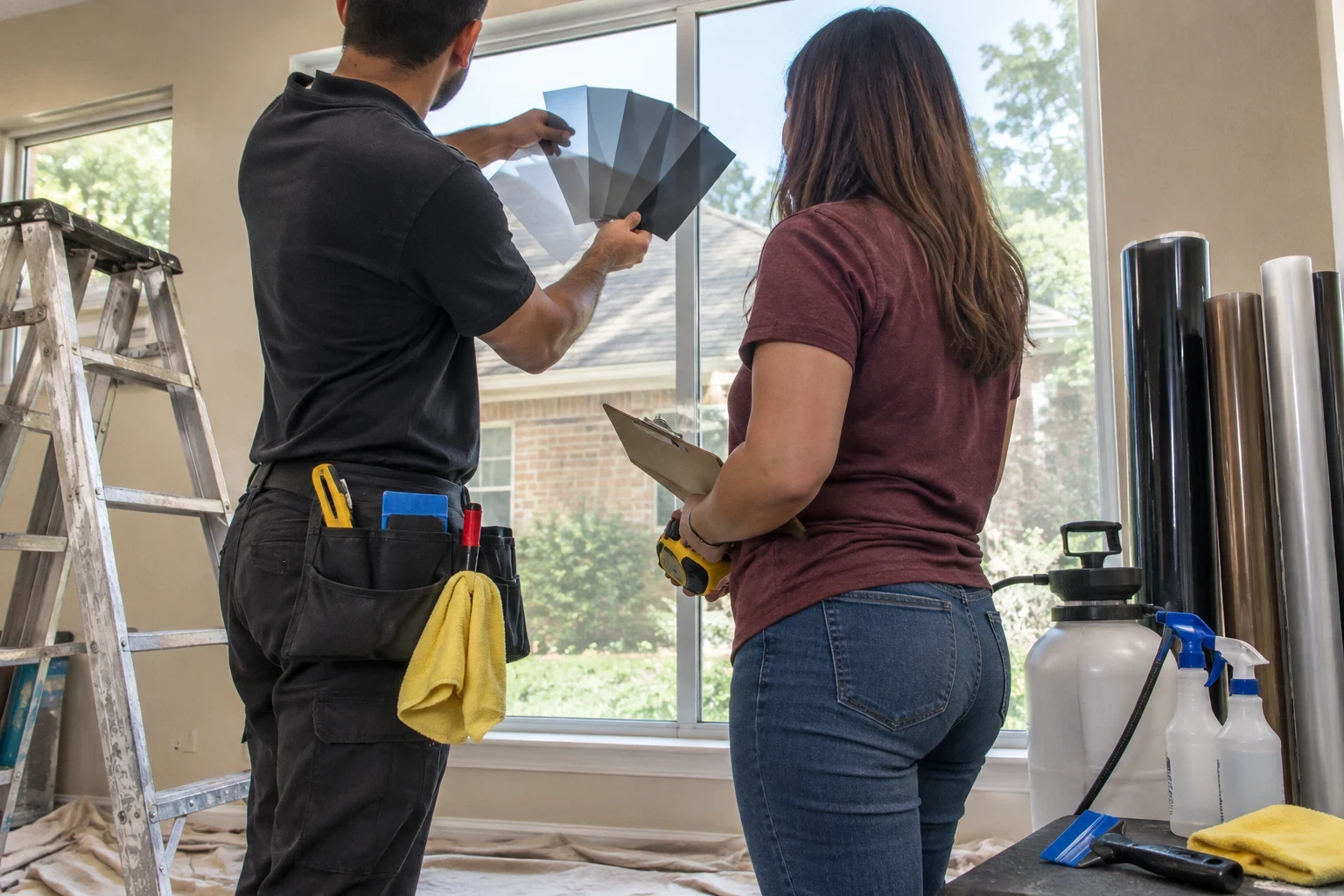
- Slightly. Diffusing films soften the view a bit, while low-reflectance options stay closer to clear. We bring samples so you can hold them against your own glass before deciding.
- Could film damage my low-E windows?
- Film adds heat load to the glass, so the wrong product on the wrong unit can stress it. That is why we check the glass type first and only use a film rated for it. If a window is not a good candidate, we tell you.
- Do I need to film every window on that side of the house?
- Usually not. We trace the burn pattern back to the specific panes and film only those, which keeps the cost down.
- How long will turf protection film last?
- Lifespan depends on the film and whether it faces the weather. Exterior-facing film breaks down sooner than interior film. We give you a realistic expectation for the product we recommend so you can weigh it against replacing turf.
- Can I fix this with a screen instead?
- Window screens do scatter some reflected light and help in some cases. Film is more consistent and does not block airflow or change the window's look as much. We can talk through both on the consultation call.
Stop the next melt before it starts
Tell us where the turf or siding is damaged and we will point out which windows are responsible. If you also want cooler rooms, we can cover ceramic window film on the same visit.