ServicesDecorative Window Tinting
Decorative Window Tinting in Alvin
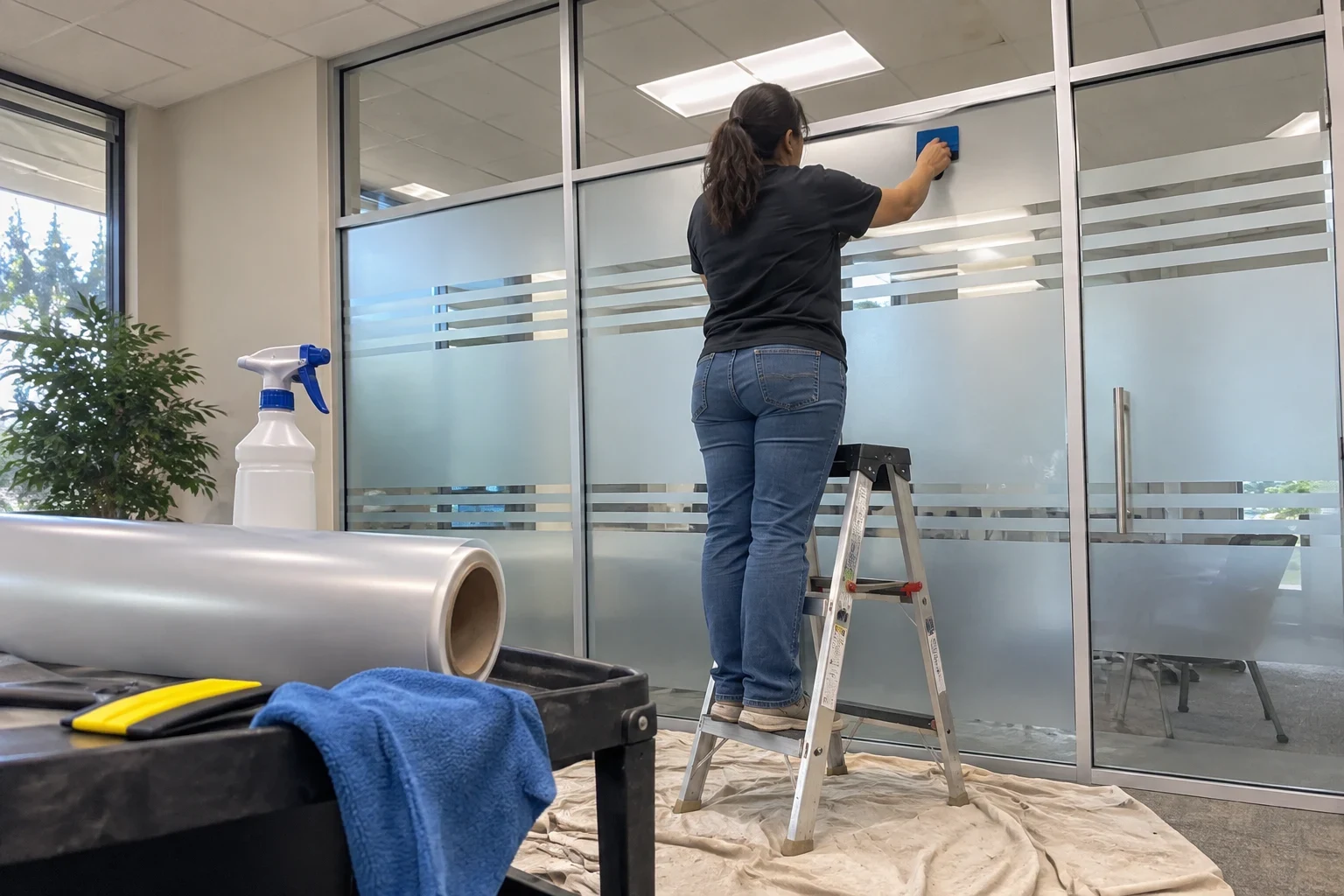
We install frosted, etched-look, gradient and patterned window film on bathroom windows, entry sidelights, transoms and interior glass doors. You get diffused light and privacy where you need it, with a film chosen to stay flat, clear-edged and easy to clean for years.
What decorative film does and where it fits
Decorative window film is a thin polyester or vinyl sheet with a printed, embossed or matte-dusted face. Applied to the inside of the glass, it scatters light instead of blocking it. A frosted bathroom window still lights the room, but nobody outside sees a shape. A gradient film on a sidelight can stay clear at the top and turn opaque at eye level.
It is the right call when you want privacy or a finished look on specific panes and do not want to replace glass. Replacing a sidelight with obscure glass means a new insulated unit and often trim work. Film goes on the existing glass in an afternoon and can be removed later if your taste changes.
Our approach is to compare what a film costs now with how long it will look good. Cheaper vinyl decorative films are fine for a closet door, but on a sunny south-facing bath window they can shrink at the edges and yellow. We tell you which product fits each pane and why.
What the work includes
- 01
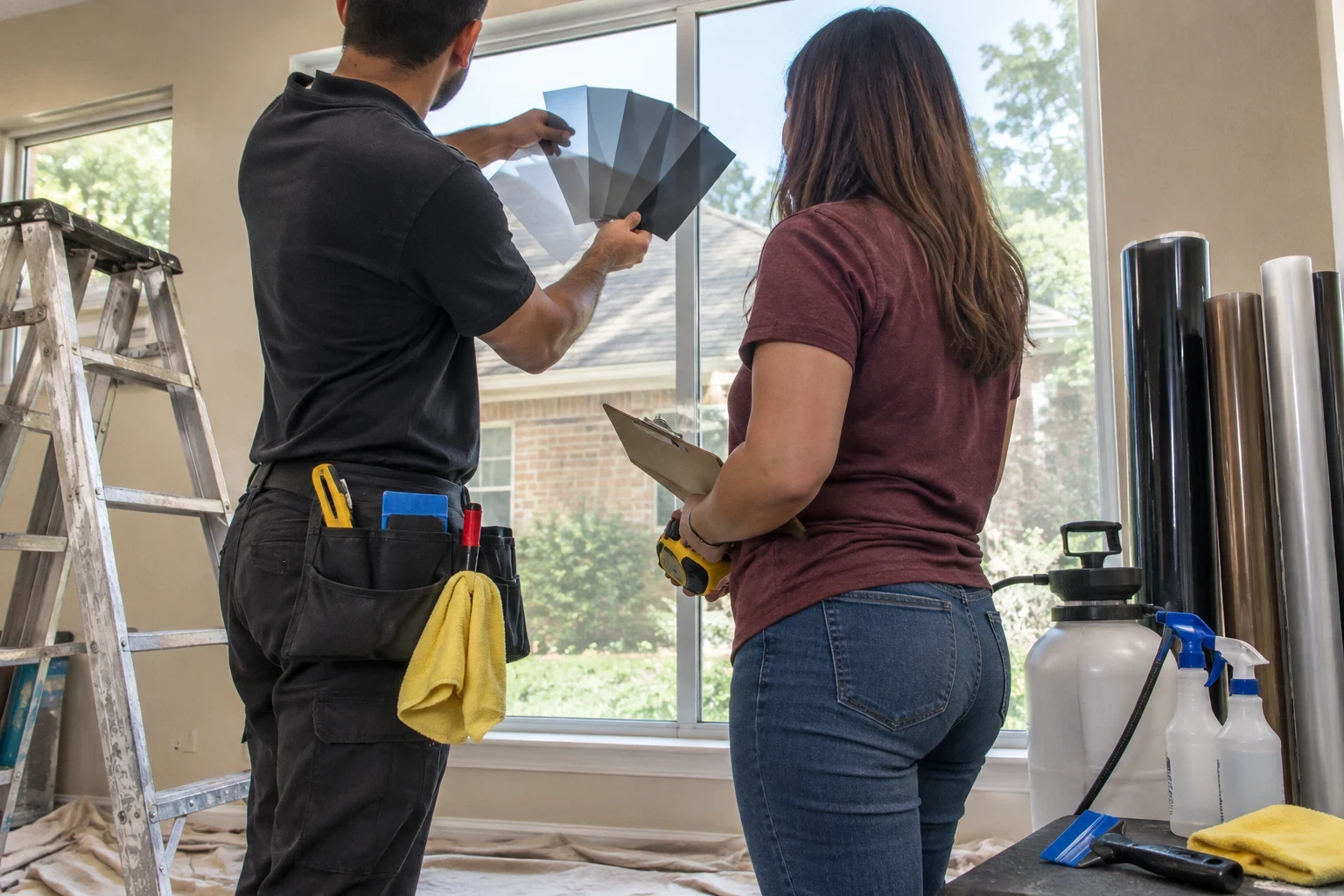
Pattern and opacity samples
We bring sample swatches of frosted, dusted crystal, linear, gradient and textured films. You hold them against your actual glass, because the same film reads differently in a north-facing bath than in a bright entry.
- 02
Glass check before install
We identify each pane as single, dual-pane or tempered and look at the seals. Some decorative films absorb more sunlight than others, and on large dual-pane units that heat build-up matters, so we match the film to the glass.
- 03
Precision trimming
Film is cut on the glass with a sharp blade, leaving a small, even gap at the gasket. That gap lets the film shed moisture and keeps the edge from lifting where the frame flexes.
- 04
Clean, bubble-free application
We scrape the glass, clean it, apply the film wet and squeegee out the solution from the center outward. Dust under film shows as a permanent speck, so surface prep takes longer than the film itself.
- 05
Care instructions
Before we leave, we explain how long to wait before cleaning and which cleaners and cloths are safe. That is most of what keeps a decorative film looking new for years.
Questions about Decorative Window Tinting?
Call(281) 938-6703Signs decorative film is the right fix
Blinds on a bathroom window stay closed
If the blind never opens, the room gives up its daylight. Frosted film keeps the privacy and lets the light back in.
Sidelights show straight into your entry
Clear glass beside the front door lets anyone on the porch see into the hall. A gradient or patterned film blocks the view at eye level while keeping the entry bright.
Interior glass doors feel exposed
French doors to a home office or a glass pantry door show clutter and movement. A dusted film gives the room separation without walls.
Old obscure glass is outdated or mismatched
Builder-grade pebbled glass can be covered with a cleaner modern pattern instead of replaced.
Curtains on transoms are impractical
High transoms and arched tops are hard to dress with fabric. Film follows the shape of the glass and needs no hardware.
What happens on install day
- 1
Talking it through by phone
We ask which windows you have in mind, what you want to hide and which styles appeal to you. That way we arrive with the right samples, not a generic catalog.
- 2
Measuring and choosing at your home
Every pane is measured and its glass type checked, and we help you settle on a pattern and film grade. The written quote prices each window on its own line.
- 3
Covering and cleaning
Drop cloths and towels go under each window and blinds or curtains get pulled aside. Next the glass is scraped and cleaned and the gaskets wiped.
- 4
Applying and trimming
The film is laid on wet, squeegeed flat and cut at the edges. A home with a few bath and entry windows usually takes just a few hours.
- 5
Cure time and final look
We check each pane with you. For a few days to a few weeks while the film cures, you may see light haze or small water pockets, longer when it is cool and humid, and they fade by themselves.
What sets the cost
Pricing for decorative film depends on the windows, the square footage and the film you choose. Each pane gets its own line on the quote, so you can see the costs and add or cut windows. A polyester film that costs a bit more often comes out cheaper over the years than a vinyl one you redo in a few years.
- Material and grade
- Polyester film keeps its shape in heat and does not yellow easily. Vinyl is cheaper and does fine on interior doors, but it may shrink on glass that gets sun.
- How detailed the pattern is
- Solid frosted film is the simplest job. Gradients, bands and patterns that have to line up over several panes use more film and need careful layout.
- Number and shape of panes
- A window of many small divided panes takes longer than a single pane of equal area. Arched transoms and circle tops are cut by hand.
- Taking off old film
- Sun-baked, peeling film must be stripped and its glue cleaned off before new film goes up, and brittle film is slow to remove.
- Reaching the glass
- Windows above a tub, over stairs or in a two-story entry call for ladders or more setup.
Common questions about decorative film
Does frosted film still hide me at night?
Solid frosted or dusted film lets people outside see light and fuzzy shapes at most, never detail. Any clear parts of a pattern or gradient show through after dark the same as plain glass. We mark those areas on the samples so you can put them where it does not matter.
Can it handle a steamy bathroom?
Yes, if it goes on the room side with the right edge gap. Humidity will not lift film once it cures. Damage comes from abrasive pads or scraping at the edge, so we show you how to clean it.
Can I take it off later?
Yes. The film peels away, and leftover glue comes off with a solution and a razor scraper. The glass is left unharmed, so film is an easy way to change a look without a big commitment.
Can it go on dual-pane windows?
Most frosted and patterned films soak up little heat and work on dual-pane glass. Darker or tinted decorative films warm the glass more, so we look at pane size and sun first. If a film does not suit a window, we tell you and offer another.
Will it also cut heat?
A little, but that is not what it is for. If heat and glare bother you more, ceramic window film or reflective window film handles that. We can use different films on different windows.
See the patterns on your own glass
Tell us which windows bother you and what you want hidden. We will bring samples, check the glass and give you a line-by-line price at no cost.