ServicesReflective Window Film
Reflective Window Film in Alvin
Reflective window film uses a thin metallized layer to bounce solar energy back outside, so rooms behind west and south glass stay cooler and the outside view reads as a mirror by day. We match the film to your glass and explain what it costs against how long it lasts.
What Reflective Film Does and When It Fits
Most window film works by absorbing heat in the film and glass. Reflective film adds a vacuum-deposited metal layer, usually aluminum or a sputtered alloy, that turns a large share of incoming solar energy back out before the glass soaks it up. That is why it posts some of the highest total solar energy rejection numbers in the category and does it at a lower material cost than many premium ceramic films.
It is the right call when heat rejection is the priority and you are comfortable with a silver, bronze or gray mirrored look from the street. It suits rooms that take hard afternoon sun, glass walls facing a pool deck, and windows where you want daytime privacy without blinds. If you want a clear, unchanged exterior, our Non-Reflective Window Film or Ceramic Window Film pages cover those options.
On value: a good reflective film holds its performance for many years because the metal layer does not fade the way dyed films do. Its long-term enemies are moisture at the edges and harsh cleaners, so we plan the installation and your care instructions around both.
What Your Installation Includes
- 01
Glass and frame assessment
We identify each pane as single or dual, annealed or tempered, and check for low-e coatings. Reflective film raises glass temperature less than dark absorptive film, but large dual-pane units still need a compatibility check before we recommend a specific product.
- 02
Shade and reflectivity selection
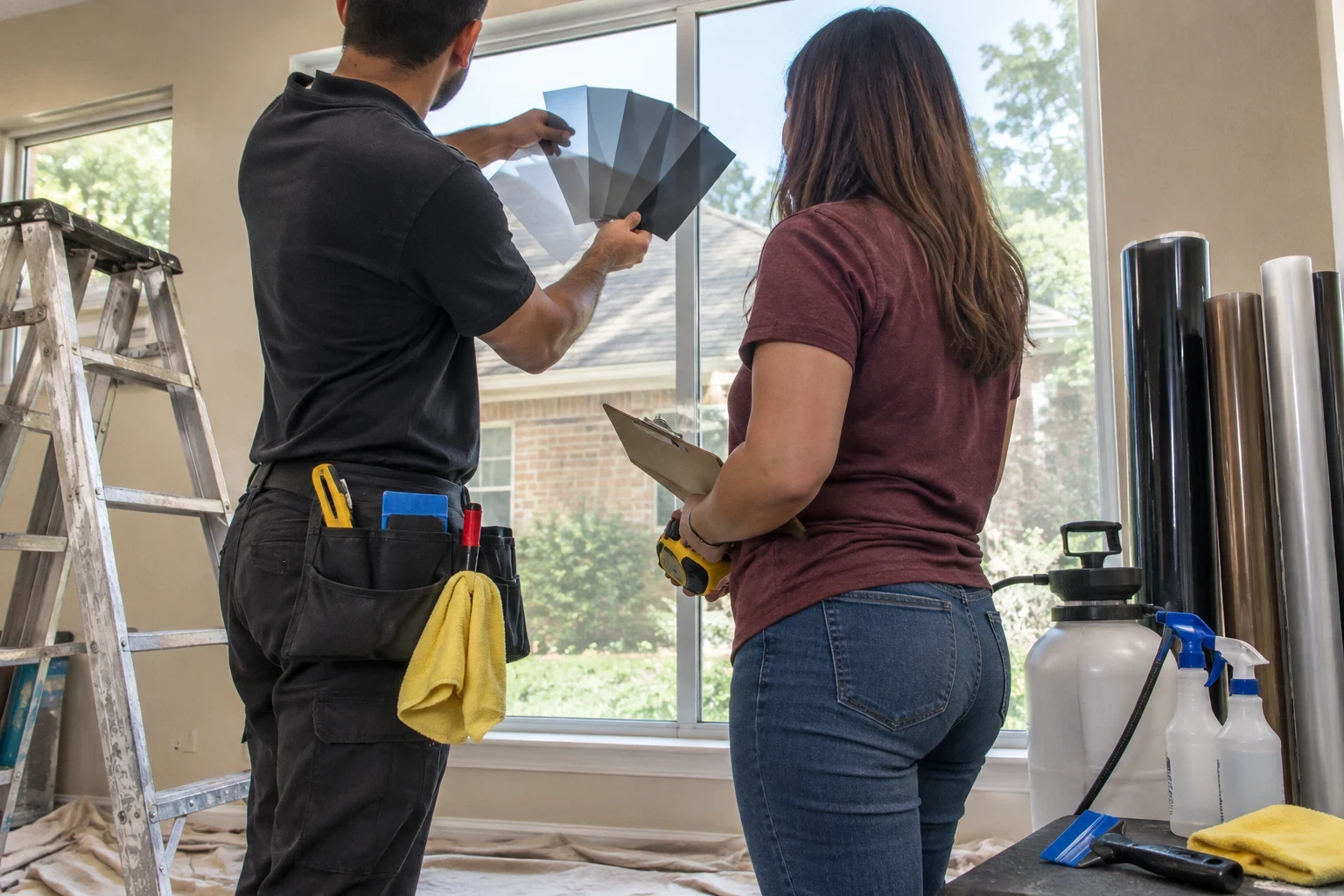
Reflective films come in several visible light levels and colors. We show you samples on your actual windows, in sun and shade, so you see the interior darkening and exterior mirror effect before anything is cut.
- 03
Glass preparation
We scrape and clean each pane to remove paint flecks, mineral spots and old adhesive. Any grit left under a metallized film shows clearly once the sun hits it.
- 04
Wet application and edge finishing
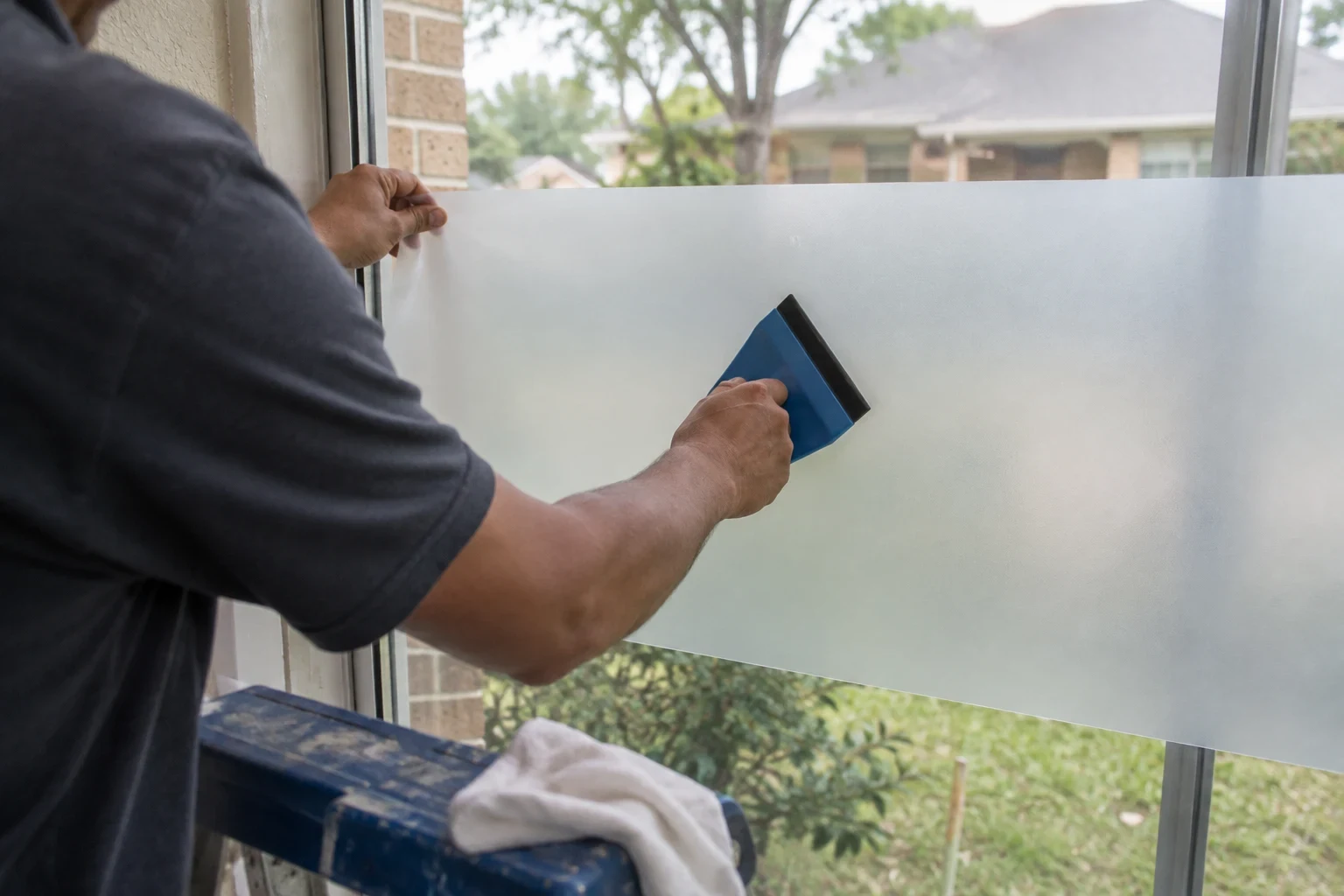
Film is laid with a slip solution, squeegeed out and trimmed with a small gap at the gasket. A clean edge line limits the places moisture can reach the metal layer.
- 05
Room protection and cleanup
We cover sills, floors and furniture near the work area and remove all trim scraps and wet towels when we leave.
- 06
Written care instructions
You get plain guidance on cure time and which cleaners to avoid, because ammonia-based products can attack the metal at the film edge over time.
Questions about Reflective Window Film?
Call(281) 938-6703Signs Reflective Film Is Worth Considering
One room runs hotter than the rest
A west-facing bedroom or living room that stays warm into the evening usually means solar gain through the glass. Reflecting that energy at the window addresses the cause instead of asking the AC to keep up.
Glare off screens and floors
Reflective film cuts visible light noticeably, which reduces the bright glare that washes out a TV or bounces off tile.
You want daytime privacy without curtains
From outside in daylight, people see a mirror, not your living room. Keep in mind the effect reverses at night when your lights are on.
Furnishings near the window are fading
Most reflective films block the large majority of UV, which slows color loss in rugs, wood and fabric. Visible light and heat also contribute to fading, and reflective film reduces those too.
Older film is purple or bubbling
Dyed film breaks down and discolors. Replacing it with a metallized film gives you a product that holds its color, and we remove the old film and adhesive first.
What the Job Looks Like
- 1
A call to start
Call and let us know which rooms trouble you and at what time of day. We go over whether reflective film, ceramic film or something else suits what you want, then book a visit.
- 2
Measurements and samples at your home
Every pane gets measured, the glass type gets confirmed and samples go up against your windows. Your written estimate is split by window, so you can do the work in stages if you like.
- 3
The install
Depending on how many panes there are and how easy they are to reach, most homes take from a few hours to a day. All prep, application and trimming happen indoors; no film goes on the outside of the glass.
- 4
Cure time and checking back
For the first few weeks you may see haze or small water pockets while the slip solution dries out, more so when it is humid. Do not touch the film in that stretch, and call us if something still looks wrong once it has cured.
What Goes Into the Price
Per square foot, reflective film tends to sit on the lower end of the price range, though your total depends on your windows and the grade you pick. We price it next to other films so you can weigh today's cost against years of performance. The estimate lists every window, with nothing tucked away.
- How much glass, and how many panes
- Film and labor grow with the square footage. A window split into lots of small panes takes more time than one big picture window with the same area.
- Grade and build of the film
- Basic single-layer metallized film costs less than dual-reflective or sputtered film, which shows less mirror indoors and looks clearer. The better grades usually last longer on harsh exposures.
- Height and reach
- Stairwell glass, transoms and two-story windows call for ladders or staging, and that setup takes longer.
- Taking off old film
- Peeling away failed film and sun-baked glue is slow, careful labor that adds to the job.
Common Questions About Reflective Film
Can people see in after dark?
They can once it is dark outside and your lights are on. The mirror shows on whichever side is brighter, so at night it turns toward the room. If you need privacy in the evening, plan on blinds or look at our Privacy Window Tinting options.
Will it weaken my cell phone or Wi-Fi signal?
The metal layer can cut signal a little, mostly in homes where reception is already borderline. Most rooms show no change you would notice. If your signal is already weak, we can talk about ceramic film, which contains no metal.
Can it go on dual-pane windows?
In most cases, though it comes down to the glass size and type and the film picked. Reflective film usually stresses glass less than a dark film that absorbs heat. We look at each unit and suggest only films rated for that glass.
What should I clean it with?
Once the film has completely cured, use a soft microfiber cloth and mild soapy water or a cleaner without ammonia. Keep razor blades and scrub pads away. Over time, ammonia can eat into the metal layer at the edges.
Will my windows look too shiny from outside?
It depends on the shade you pick. Lighter and dual-reflective films have a gentler mirror look than high-reflectance silver. We put samples on your own glass so you can view them from the yard first, and it pays to read any HOA rules on how the outside looks.
Try Reflective Film on Your Windows
Let us know which rooms run too hot or too bright. We bring samples, look over your glass and hand you a written estimate that sets reflective film beside the other choices.