ServicesNon-Reflective Window Film
Non-Reflective Window Film in Alvin
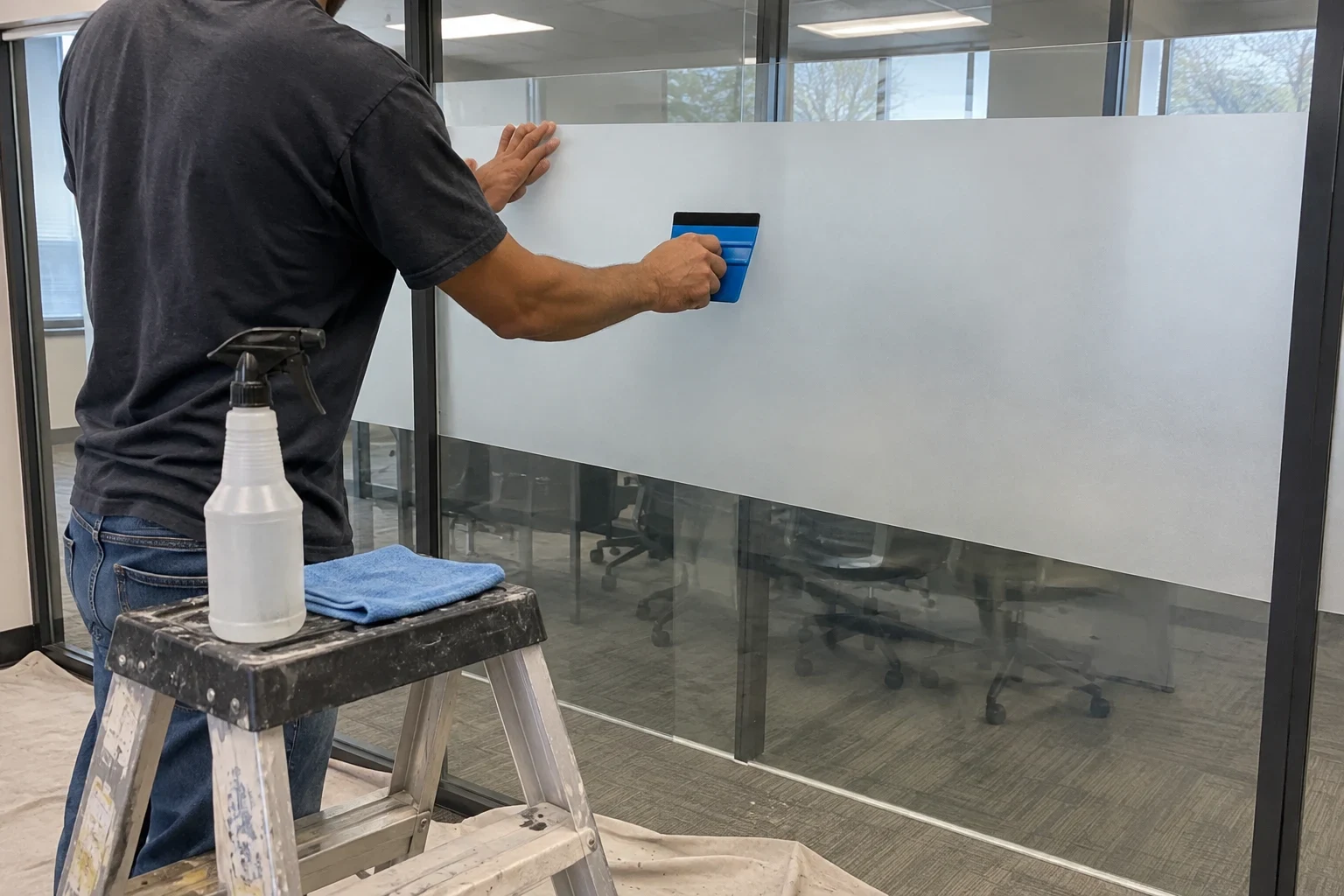
We install low-reflectance carbon and ceramic window film that cuts heat, glare and UV without the shiny exterior or the nighttime mirror effect. Your windows look like clear glass, and the film keeps working for years with nothing more than mild soap and a soft cloth.
How Non-Reflective Film Works and Where It Fits
Many heat-control films turn sunlight away with a metallized layer. It does the job, but the glass looks like a mirror from outside and like a dark mirror from inside once the sun goes down. Non-reflective film works another way: carbon or nano-ceramic particles inside it absorb and block infrared and UV energy, so the glass reflects about as much visible light as it would bare.
Choose it when you want heat and UV control and also care about how your windows look: a street-facing front under HOA rules, a living room where you want to see the yard after dark, or a home office where reflections in the glass get in the way. If the most heat rejection matters more to you than the look, our reflective window film page explains that trade-off.
We weigh the choice against how long the film will last. Dyed film can look fine at first and fade after a few Gulf Coast summers, while carbon or ceramic film keeps its color and performance much longer. You see both sides before you choose.
What Comes With the Job
- 01
Checking the glass and frames
We record whether every pane is single or dual-pane, tempered or low-E coated. That tells us which films the glass can take and which would put too much thermal stress on it.
- 02
Samples tried on your glass
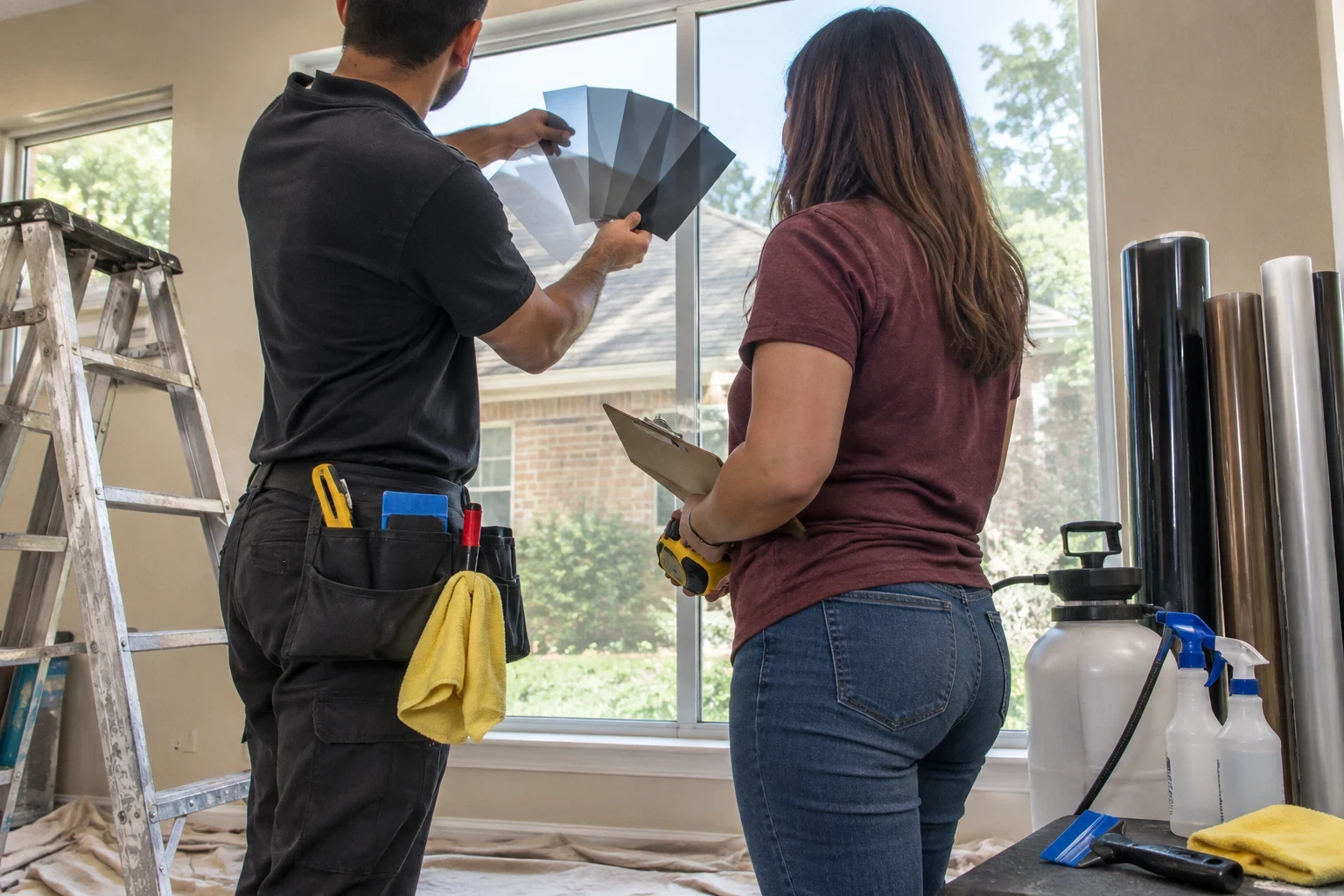
Real film samples go against your windows so you can judge the true tint and color from indoors and from the street. A spec sheet never matches what film looks like on your own glass.
- 03
Preparing the glass
We razor-scrape and clean every pane to take off paint flecks, mineral spots and old glue. Anything left under the film becomes a permanent bump, so we do not rush this.
- 04
Wet install and trimmed edges
The film is laid on slip solution, squeegeed flat and cut with a small gap at the gasket, which keeps the edge from lifting or holding moisture.
- 05
Protecting the room and cleaning up
Sills and floors near the windows get covered, we move what has to move, and the frames get wiped down at the end.
- 06
Curing and cleaning directions
We leave simple directions for the cure period and for cleaning the film so it keeps working.
Questions about Non-Reflective Window Film?
Call(281) 938-6703Signs Non-Reflective Film Is the Better Choice
Rooms run hot but you dislike mirrored glass
West and south windows heat a room all afternoon, yet a shiny exterior would clash with the house or break HOA rules.
You lose the view after dark
Reflective film makes windows act like mirrors at night when the lights are on. Non-reflective film keeps the glass see-through in the evening.
Old film has turned purple or bubbly
That color shift is dye breaking down under UV, and bubbles mean the adhesive has failed. Replacement with a carbon or ceramic film avoids repeating the problem.
Floors and furniture are fading
UV light bleaches wood, fabric and rugs. These films block nearly all of it while letting visible light through.
Glare on screens
Low-reflectance film cuts direct glare without adding a second reflection of the room on the glass.
How a Job Day Runs
- 1
Consultation and quote by phone
We talk through the rooms, the problem you want solved, and your glass. Then we set a time to measure and show samples in person.
- 2
Measure and confirm the film
We measure every pane, confirm glass type, and agree on the film and tint level in writing before any work is scheduled.
- 3
Prep and install
We protect the room, clean each pane, apply the film wet and trim the edges. A typical room goes quickly once the glass is prepped.
- 4
Walkthrough and cure
We check each window with you. Light haze or small water pockets can appear for a few weeks while moisture evaporates through the film; that is normal and clears as it cures.
What Sets the Cost
The price depends on the amount of glass, the film you choose and how easy the windows are to reach. Each line of the quote is separate, so you can set a lower-cost film against a longer-lasting one and see the cost per year of each. That figure tends to matter more than the opening price.
- How the film is made
- Carbon film is priced above dyed film, and nano-ceramic above carbon. At any given tint level, ceramic rejects the most heat and leaves cell and Wi-Fi signals alone.
- Glass area and number of panes
- A window divided into many small panes needs more trimming than a single large pane covering the same area.
- Reaching the glass
- Upstairs windows, tall transoms and panes behind built-ins or heavy furniture call for ladders or more setup.
- Taking off old film
- Worn-out film must be steamed and scraped away and the old glue cleaned off before the new film goes up.
Common Questions About Non-Reflective Film
Will my rooms get dark?
Only with the deeper shades. These films are made in several visible light levels, and even the lighter ceramic ones turn back a big share of infrared heat. We put samples on your glass so you can see how bright the room stays.
Can it go on dual-pane or low-E glass?
In most cases, as long as the film suits the glass. Film soaks up some solar energy, and a poor match on some insulated or coated glass can add thermal stress. We identify the glass first and recommend only films rated for it.
Does it stop as much heat as reflective film?
At the same tint level, reflective film usually turns back more total solar energy. Ceramic non-reflective film closes much of that gap while keeping a natural look. We show you the figures so you can judge whether the difference is worth the change in appearance.
What lifespan should I expect?
Carbon and ceramic films use no dye, so they hold off the fading and color change seen in cheaper films. Cleaned gently, they keep their look and performance for many years, and that is why we often suggest them instead of dyed film.
What is the right way to clean it?
Let the film cure, then clean it with mild soapy water and a soft cloth or rubber squeegee. Ammonia cleaners, razor blades and scrub pads can scratch or cloud the surface, so leave them out.
Try the Film on Your Windows
Let us know which rooms get too hot or too bright. We will bring samples and a written quote for films suited to your windows, and the consultation costs nothing.