ServicesOffice Window Tinting
Office Window Tinting in Alvin, TX
We install window film on office glass to stop monitor glare, even out hot and cold zones and block the UV that fades furniture. You get a side-by-side comparison of film options, their expected lifespan and their upkeep before you choose.
Film matched to the problem in each room
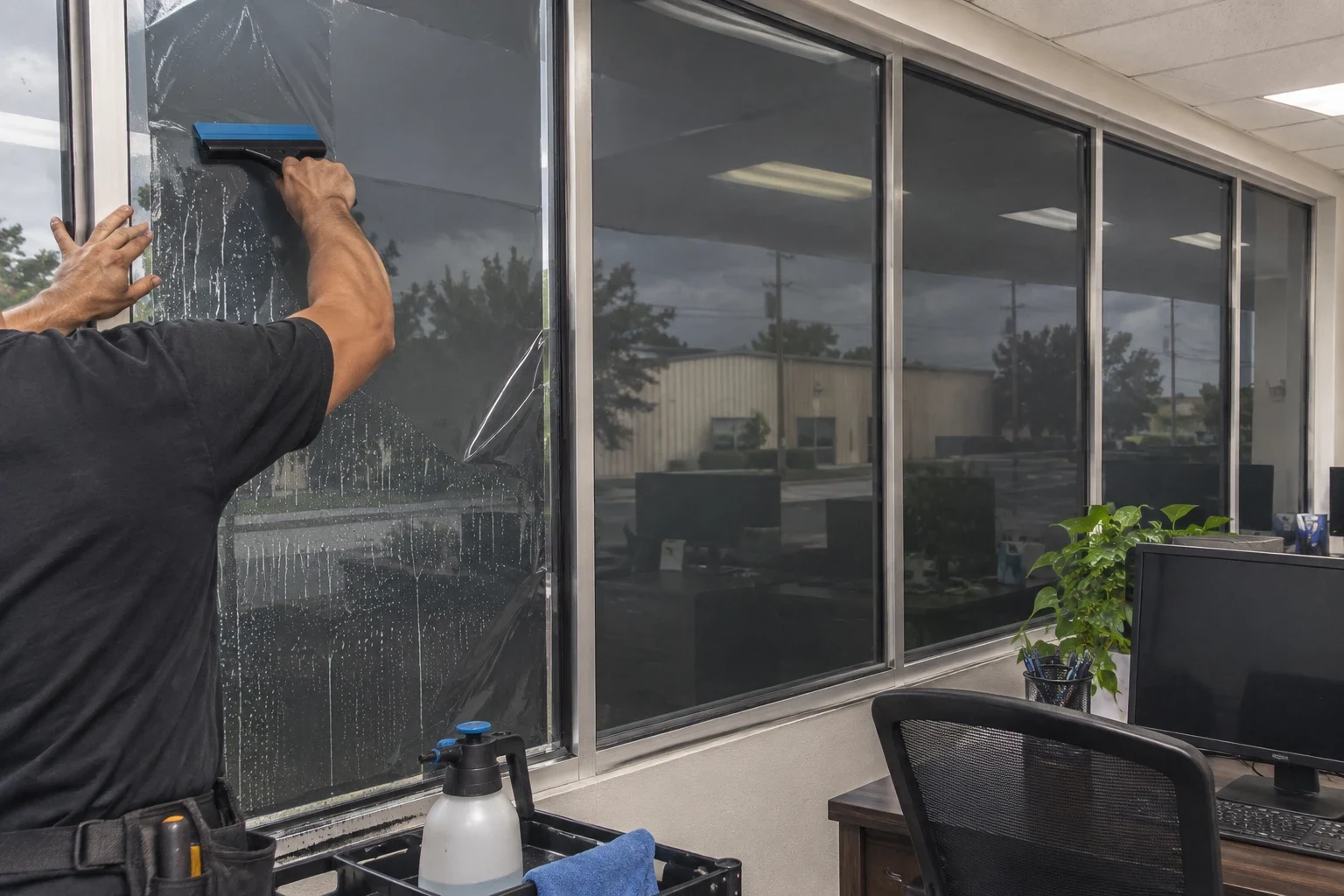
Office window tinting puts a thin polyester film on the inside face of your glass. That film controls three things: the visible light that washes out screens, the infrared energy that overheats one side of the floor, and the ultraviolet light that bleaches carpet, upholstery and printed material. We pick the film room by room instead of running one shade across every pane, because a conference room with a display has different needs than a break room.
The cheapest film on install day is rarely the cheapest over a lease term. Dyed films cost less up front, but the dye breaks down under strong Gulf Coast sun and can fade or turn purple. Ceramic film and sputtered metal films cost more at the start and hold their color and heat rejection much longer. We put those numbers next to each other so you can weigh them against how many years you expect to stay in the space.
The work happens inside, one area at a time, so your staff can keep working.
What office tinting covers
- Glass check first
- We identify the glass in each opening: clear, factory-tinted, low-E or sealed dual-pane units. Dark, high-absorption films can raise thermal stress at the edge of large insulated panes. We confirm the film suits the glass before we recommend it.
- Glare reduction at workstations
- We choose a visible light transmission level that takes the hot spots off monitors without making the room feel dim. Desks facing the glass and rooms with wall displays get the most attention.
- Heat rejection on sun-facing walls
- West and south exposures carry most of the afternoon load. Film with strong total solar energy rejection evens out temperatures between zones, so one thermostat stops fighting the rest of the system.
- UV protection for interiors
- Quality window film blocks nearly all ultraviolet light, which slows fading on flooring, chairs and anything displayed near the windows.
- Clean edges and cleanup
- We trim film close to the gasket, squeegee out the water and wipe down sills and frames. Liner, scraps and protective coverings leave with us.
Signs your office needs window film
Blinds stay shut all day
If staff close the blinds every morning just to see their screens, you are paying for windows nobody can use. Film lets you keep the view and lose the glare.
Screens wash out at certain hours
Glare that shows up at the same time each day points to a specific exposure. That is usually one wall, and treating it can cost far less than a whole floor.
One side runs hot
Complaints about a warm corner office or a cold interior room often trace back to solar gain through untreated glass. The HVAC is working against the sun.
Fading near the windows
Carpet lighter at the window line, sun-bleached chair fabric or curled printed signage are UV damage that keeps adding up.
Old film failing
Bubbling, peeling or purple film is dye breakdown or adhesive failure. We remove it, clean off the residue and install a film built to last longer.
What sets the price
An office tinting price depends on the glass, the film and conditions at the site, and we review each before we write an estimate. Film choice affects both what you pay now and how soon it needs replacing, so the estimate shows both.
Glass area and number of panes
The amount of glass counts, and so does how many separate panes it is split into. Lots of small panes mean more cutting and trimming than a handful of big ones.
Kind of film
Dyed, metalized and ceramic films vary in price, heat rejection and lifespan. One that lasts far longer can cost less for each year it is up.
Reaching the glass
High clerestory glass, tall storefront panes and windows behind fixed furniture call for ladders, lifts or more setup time.
Taking off old film
Pulling failed film and scraping off baked-on glue is a separate labor step, and old dyed film can come off slowly.
Timing
Working section by section while you are open, or outside your usual hours, can change how the crew is planned and how long we are on site.
How an office job runs
- 1
Consultation and site visit
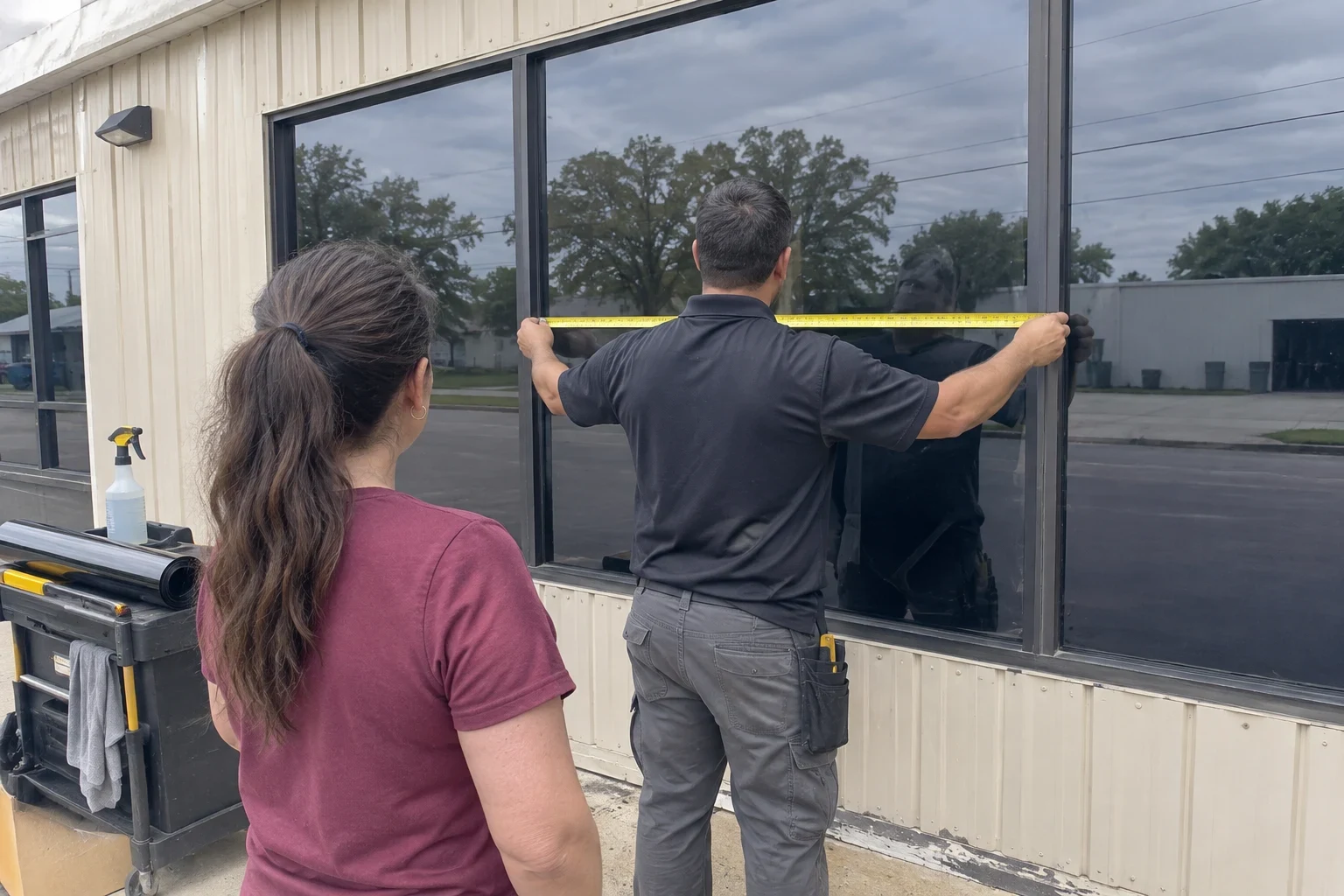
It starts with a phone call. We then visit to measure every pane, note which way each wall faces, check the glass type and look at how desks sit relative to the windows.
- 2
Written options side by side
You get a written estimate listing each film option, its performance, its expected lifespan and its care needs. Nobody is pushed toward the most expensive film when a mid-range one fits.
- 3
Installation day
We plan the work around your business hours and move through the office in sections. Desks and electronics near the glass are covered, the glass is scraped and cleaned, and the film is cut, applied and squeegeed in place.
- 4
Curing and walkthrough
Light haze or small water pockets are normal while the adhesive cures, which takes longer in cool, damp weather. We walk the space with you and explain how and when to clean the glass so the film lasts.
Questions about office tinting
Will film leave our office feeling dim?
Not when the light level is picked for the rooms. Spectrally selective ceramic film turns back plenty of heat and still lets most visible light in. We can put samples on your glass so you see the result before choosing.
Is film an option on dual-pane or low-E glass?
Frequently, though not every film fits every unit. We look at the glass type, pane size and exposure, then suggest a film whose absorption keeps edge stress within a safe range. If a film does not suit your glass, we say so.
Does a leased space need the landlord's OK?
Lots of leases count window film as an alteration, so read yours or check with the property manager. We can supply the film's product data sheet to pass along, which tends to settle their questions about looks and glass compatibility.
What lifespan should we expect from office film?
That depends on the film and how much direct sun reaches the glass. Ceramic and good metalized films keep performing for many years, and dyed films usually fade sooner. Because of that gap, we compare lifespan alongside the starting price.
Does our staff have to leave while you work?
Usually not. We do one area at a time and just need clear access to the glass plus a bit of room to set up. Desks by the windows might move for a short while, and we cover anything near the work.
Can you match the film on our other floors?
Send us the details or have us look at what is already up. We can often come close on tint and reflectivity so the building looks uniform from outside, and if that film is failing we can talk about replacing it.
Weigh your office film options first
We measure the glass, see how the sun hits each wall and lay out options with their cost and lifespan next to each other. There is no charge for the consultation.