ServicesPrivacy Window Tinting
Privacy Window Tinting in Alvin
Our privacy window film keeps people from seeing into bathrooms, bedrooms, street-side rooms and offices while still letting daylight in. We pick the film type by the hours you need privacy, since a film that hides you at midday can leave you on view after dark.
Picking privacy film that works at the hours you need it
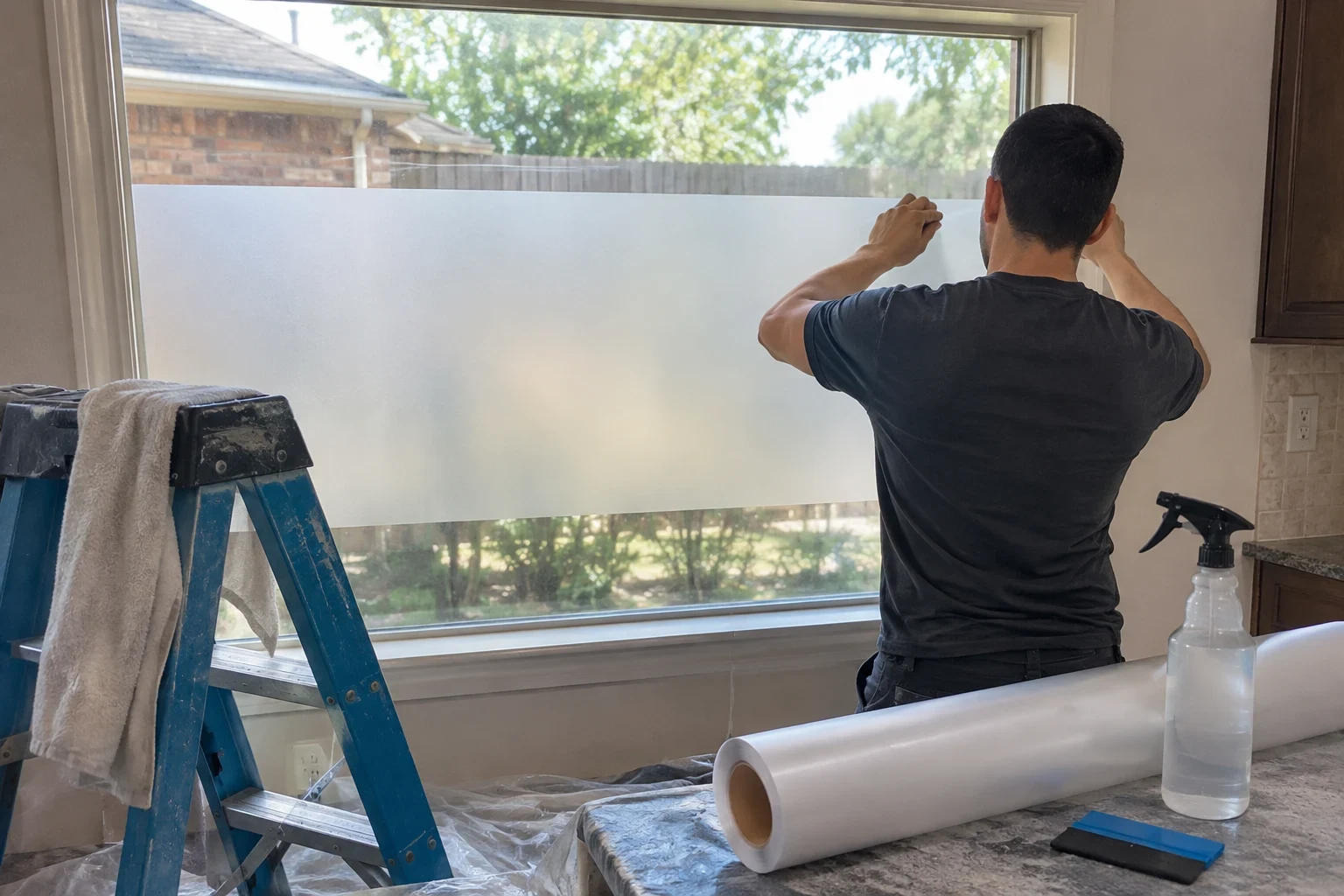
Privacy film comes in a few distinct types, and each one works for a different reason. Reflective one-way film has a thin metalized layer that mirrors the brighter side of the glass. During the day the outside is brighter, so people see a reflection while you see out. After dark, with your lamps on, the effect reverses and the film turns transparent from the street. Frosted and opaque films scatter or block light with a pigmented or etched-look layer, so they hide you in daylight and after dark alike, but they also hide the view.
That difference is why we ask how each room gets used before we recommend anything. A front living room that matters mostly in daylight can do well with a dual-reflective film that keeps a clear view out. A bathroom or a ground-floor bedroom usually needs frosted film, since night is when privacy matters most there.
We also weigh what the film costs against how long it lasts. A premium film may cost more up front, but its scratch-resistant topcoat and stable adhesive hold up for many years with simple cleaning, while a cheap dyed film can fade, haze or bubble and need stripping and replacing. We lay out both sides so the choice still makes sense years from now.
What comes with our privacy tinting
- Privacy review for each room
- We check every window from indoors and out, note the direction it faces and ask what hours you use the room. That points us to reflective, dual-reflective, frosted or blackout film.
- Checking film against the glass
- Darker, more reflective films take in more solar energy, which can add thermal stress on certain dual-pane and tempered glass. Before recommending a film for a window, we compare the glass type and seal condition with the film maker's guidance.
- Samples tried on your windows
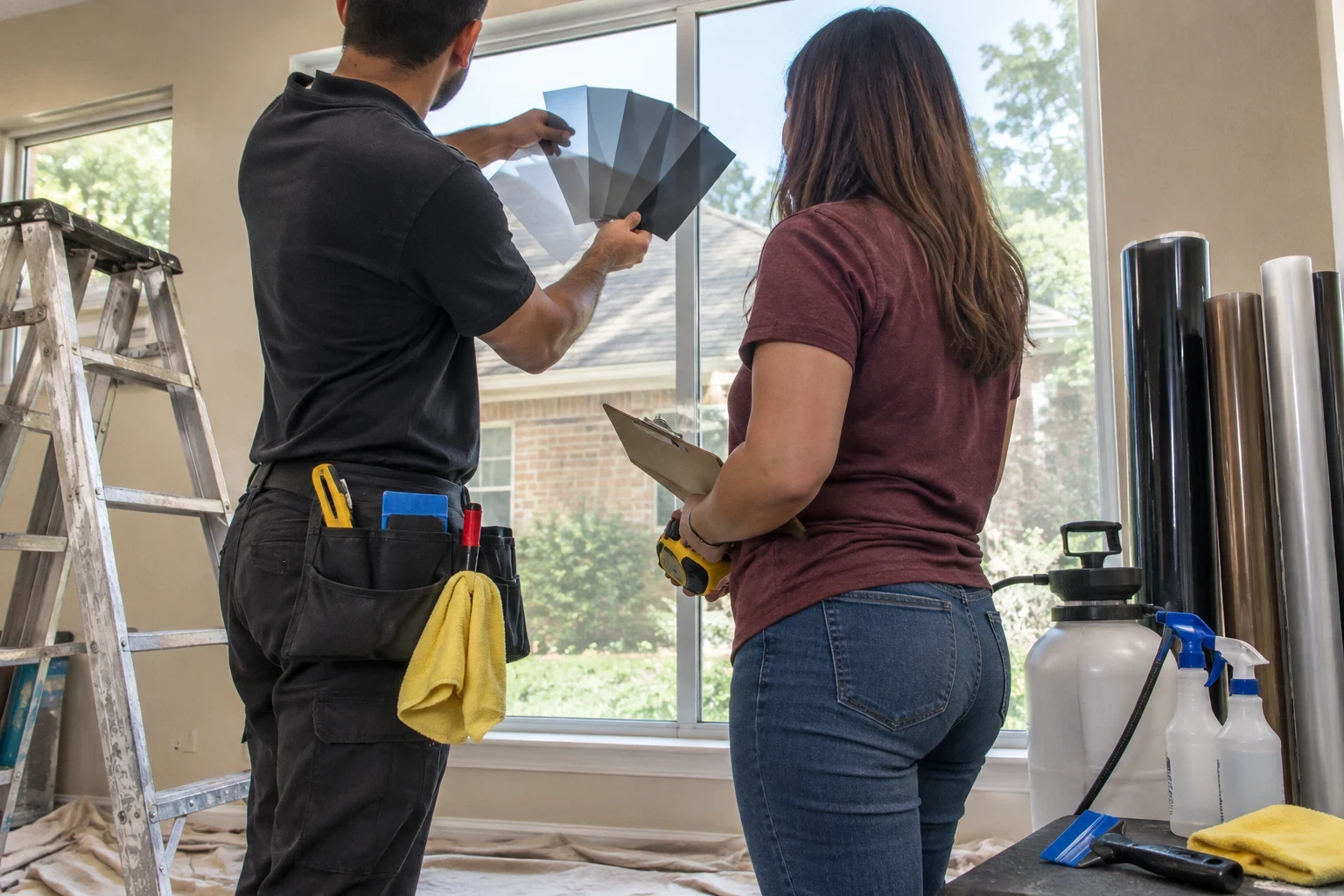
- We press samples against your real glass so you can judge the view out and the look from the street in your own light, not a showroom's.
- Prep, installation and edge work
- The glass is cleaned and scraped of paint specks and grit, then the film goes on over slip solution and the water is squeegeed out. We trim the edges with a small, even gap so the film stays down where it meets the frame.
- How to care for it
- We give you simple directions on curing time and cleaning, including the cleaners to avoid, so the film's coating lasts its full life.
Signs privacy film is worth a look
You keep the blinds closed all day
If shades stay down just to block a neighbor's line of sight, you are paying for daylight you never use. Film can keep the light while blocking the view.
A bathroom or entry window faces the street
Clear glass beside a tub, shower or front door is a common complaint. Frosted film handles it without replacing the glass with obscure panes.
Your office or conference room is on display
Glass walls and ground-floor windows let passersby see screens and meetings. Privacy film and glare reduction often solve both problems at once, and our office window tinting page covers that work in more detail.
Old film is purple, peeling or bubbling
Dyed films break down in strong sun, and adhesive failure shows up as bubbles along the edges. We strip the old film and adhesive before installing a longer-lasting product.
Glare and heat come with the view
Many privacy films also cut heat gain and UV, so a west-facing room can get cooler and more private in one install.
What sets the price of privacy film
The price comes from the film you pick and the work each window needs, not one fixed figure for a house or suite. Our quote is itemized so you can see where your money goes and where a lower-cost film would cost you more down the line.
Kind of film
Frosted and decorative-style films, reflective one-way films and blackout films are made from different materials. Those with extra heat rejection or a heavier scratch-resistant coat cost more and tend to last longer.
Glass area and number of panes
A window divided into many small panes needs more cutting and edge work than a single pane with the same total area.
Height and reach
Transoms, two-story glass and windows behind built-ins or heavy furniture take longer and can call for ladders or staging.
Stripping old film
Taking off aged film and sun-baked glue is slow, careful work. It adds labor, but without it the new film bonds poorly and looks cloudy.
How the job runs on install day
- 1
Free consultation
We talk through your rooms by phone, then confirm film choices and measurements at your windows. You get a clear written quote per window or per room.
- 2
Protecting the space
We move what is near the windows with your OK and lay towels or drop cloths on sills and floors to catch slip solution.
- 3
Cleaning and application
Each pane is cleaned and scraped, the film is cut to size, applied wet and squeegeed out from the center to push out water and air.
- 4
Curing and walkthrough
Small water pockets or a slight haze are normal while the film cures, which usually takes days to a few weeks depending on sun and humidity. Our Gulf Coast humidity can slow it a little. We walk each window with you and pick up our materials before we leave.
Common questions about privacy film
Does one-way film let people see in after dark?
It does once it is dark outside and your lights are on. Reflective film mirrors whichever side is brighter, so at night the effect switches. For privacy after sunset we suggest frosted film in that room or reflective film paired with blinds.
Could privacy film make a room too dim?
Not when you pick it by visible light transmission. Frosted films pass plenty of soft light, and blackout film stops almost all of it. We put samples on your glass so you can judge the brightness before committing.
Can privacy film go on dual-pane glass safely?
Plenty of films can, but the darker and more reflective ones put more heat on the glass. We check your glass type against the film maker's compatibility guidance and point you to a lighter or lower-absorption film where a window needs it.
What is the right way to clean the film?
Let it cure completely, then clean with a soft cloth or rubber squeegee and mild soapy water. Ammonia cleaners and scrub pads slowly wear away the protective coating, so avoid them.
Can the film come off down the road?
Yes. Quality film peels away and the glue cleans off without hurting the glass, which helps if you sell or use a room differently later. Low-cost films often tear and leave more residue, so taking them off takes longer.
Find the right privacy film for each room
Tell us which windows bother you and when. We will explain which film fits, how long it should last and what it costs, with no pressure to tint every window.