ServicesCommercial Window Tinting
Commercial Window Tinting in Alvin
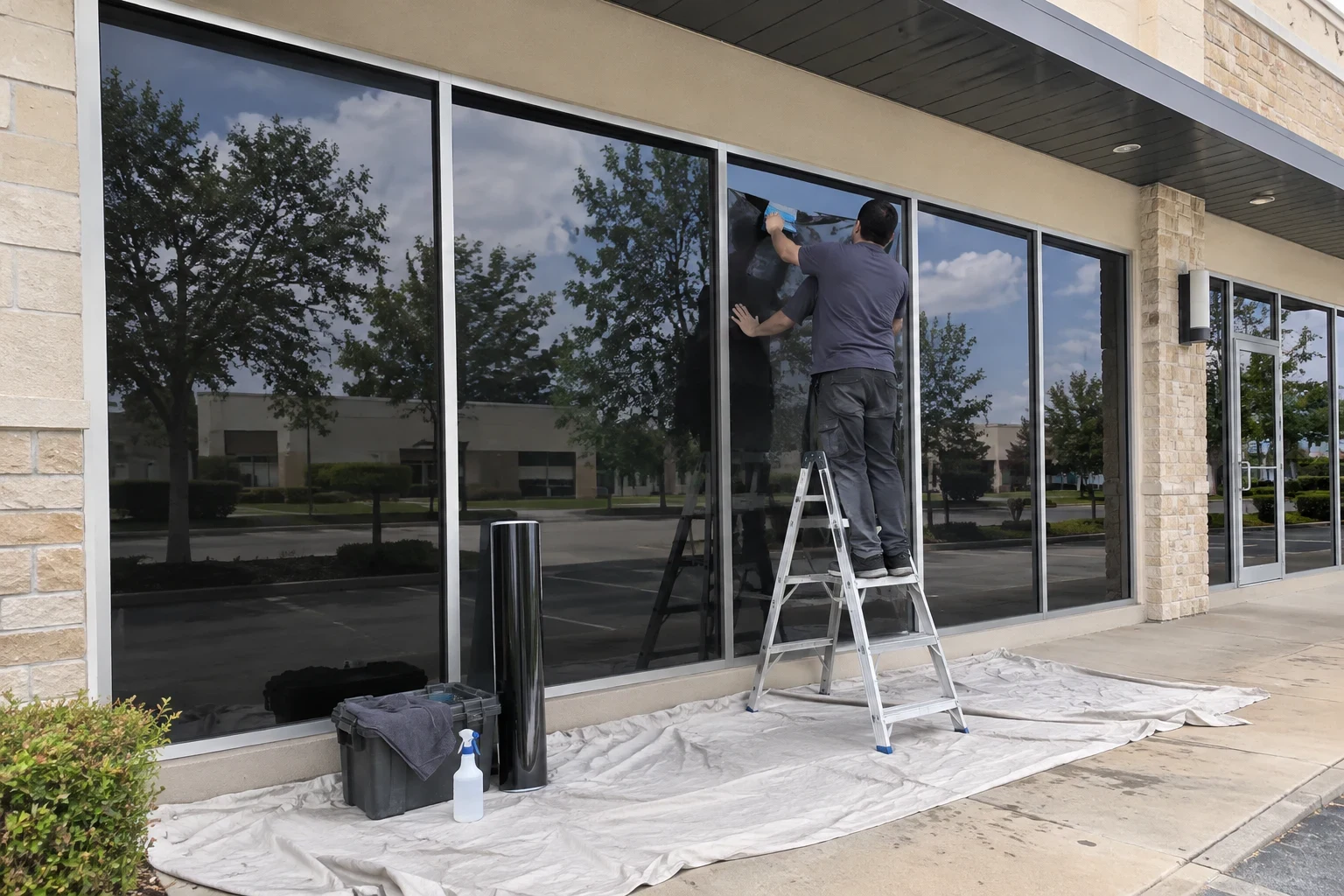
Our window film goes on storefronts, showrooms and commercial buildings to reduce solar heat, glare and UV fading. We first look at your glass type and how the sun hits it, then show you what each film costs next to how long it will last.
How window film helps a commercial building
Big glass brings in daylight, and it brings in solar heat with it. On a storefront facing west, afternoon sun can heat the space faster than the HVAC can cool it, and UV fades stock, floors and signs near the windows. Window film is a thin polyester layer with a pressure-sensitive adhesive, applied to the inside of the glass, that turns back some of that energy before it gets into the room.
Which film is right varies by building. Some need the most heat rejection possible. Others need privacy during the day or less glare on screens and checkout counters, and some must keep a clear, welcoming view from the parking lot. We work with dyed, metalized, ceramic and spectrally selective films, and each balances cost, clarity, heat performance and service life differently.
The idea behind our advice is plain. A low-cost film that needs replacing early can cost more over time than a better film put up once. We show you both figures so your decision has the whole picture.
What the job includes
- 01
Glass and exposure survey
We note each pane's size, orientation, and whether it is annealed, tempered or a dual-pane insulated unit. We also check for low-e coatings. These details decide which films are safe to apply.
- 02
Film-to-glass compatibility check
Dark or highly absorptive film can raise glass temperature and add thermal stress, especially on large annealed or dual-pane units. We match absorption levels to the glass so the film does not create a cracking risk.
- 03
Side-by-side film options
You see samples of several films on your own glass, with their heat rejection, visible light transmission and expected upkeep. That way you are comparing real performance, not brochure claims.
- 04
Clean, edge-trimmed installation
We scrape and clean each pane, wet-apply the film, and squeegee out water and air. Edges are trimmed with a small, consistent gap at the frame gasket so the film can cure and stay put.
- 05
Workspace protection and cleanup
We cover sills, displays and floors near the glass and haul away liner and trim waste, so you can reopen the space as soon as we finish.
Questions about Commercial Window Tinting?
Call(281) 938-6703Signs your building needs window film
Hot zones near the glass
If customers or staff avoid seats by the windows in the afternoon, solar heat gain through the glass is overpowering the cooling in that area.
Faded merchandise or flooring
Bleached packaging, sun-dulled fabric and discolored floors point to UV and visible light exposure. Most quality films block nearly all UV, which slows that fading.
Glare on screens and registers
Reflections that wash out monitors, POS displays or TVs mean too much direct light is coming through. Film can cut that glare without turning the space dark.
HVAC running hard all afternoon
Units that run constantly on sunny days, or rooms that never quite reach the setpoint, often trace back to unshaded glass. That is extra wear on equipment you will eventually pay to replace.
Old film that is bubbling or purple
Dyed film breaks down over time. It turns purple, then bubbles and peels as the adhesive fails. At that point it hurts the look of the storefront and no longer rejects much heat.
The steps of a commercial install
- 1
Phone call first, then a visit
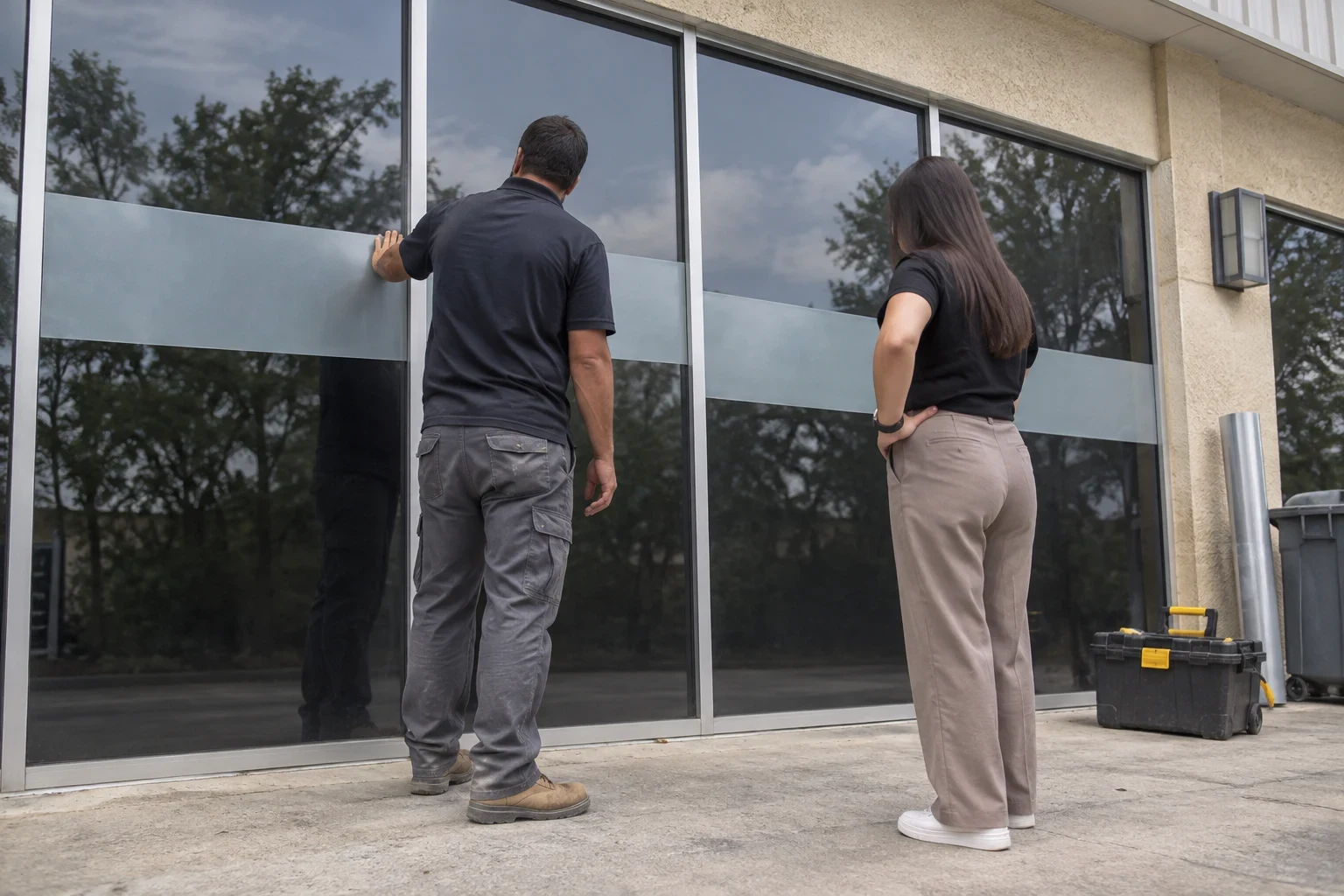
We begin by talking on the phone about your biggest concern: heat, glare, privacy or fading. Next we come out to measure, identify the glass and try samples on your windows.
- 2
A written proposal that shows lifespan
Your proposal is itemized by window and film type. For every option you see today's cost next to its expected service life and upkeep.
- 3
Timed to fit your hours
We schedule the work to keep disruption down and do one section of glass at a time so the rest of the space stays in use. Any old film is steamed and scraped off first and the leftover adhesive cleaned away.
- 4
Curing and a final walkthrough
The film may look a little hazy for a few days to a few weeks as leftover moisture dries out, based on temperature and film thickness. We go over the job with you, explain cure time and cleaning, and leave care instructions.
What sets the cost of commercial tinting
The amount of glass and the film on it drive most of the price, with access and prep also playing a part. Every window is priced on its own so you can see where the money goes, and we show the long-term view so a lower bid cannot hide a shorter life.
- Square footage of glass
- Film is priced by the glass area it covers. A run of large, same-size panes goes quicker per foot than a mix of small or oddly shaped lites.
- Which film you choose
- Dyed film is cheapest at the start and fades first. Ceramic and spectrally selective films cost more but keep their color and heat rejection far longer, which often makes them cheaper for each year of service.
- Height and reach
- Street-level storefront glass is straightforward. Clerestory windows, high transoms and glass behind fixed displays call for ladders, lifts or more setup time.
- Stripping old film
- Removing failed film and baked-on glue takes a lot of labor, and the cost climbs with how old and worn the existing film is.
Questions businesses ask about window film
Can window film crack our glass?
It can when the film is the wrong match. A heavily absorbing film on big annealed or dual-pane glass heats the middle of the pane while the edges stay cool, and that difference can crack it. We identify your glass first and choose films with absorption suited to it.
Will film make our storefront look dark or closed?
Not with the right film. Spectrally selective and ceramic films turn away much of the infrared heat but pass most visible light, so the glass still looks clear from the street. For more privacy, we can show you darker or reflective films and how they appear from outside.
Can you install while we stay open?
In most cases, yes. We go one section at a time, cover the area around each window and time the visit around your busiest hours. The work is quiet and uses nothing but water, film and hand tools.
What lifespan should we expect from commercial film?
That depends on the film and how much direct sun hits the glass. Dyed films give out first, and ceramic and metalized films last a good deal longer. We put the expected service life of each option in writing so you can compare cost per year instead of only the day-one price.
What is the right way to clean filmed windows?
Once the film has fully cured, use a soft cloth or rubber squeegee with mild soapy water. Keep ammonia cleaners, razor blades and abrasive pads off the filmed side, since they can scratch the hard coat protecting the film.
See the costs before you pick a film
Describe your building and how the sun affects it. We will try samples on your glass and give you an itemized quote that sets up-front cost beside service life.